
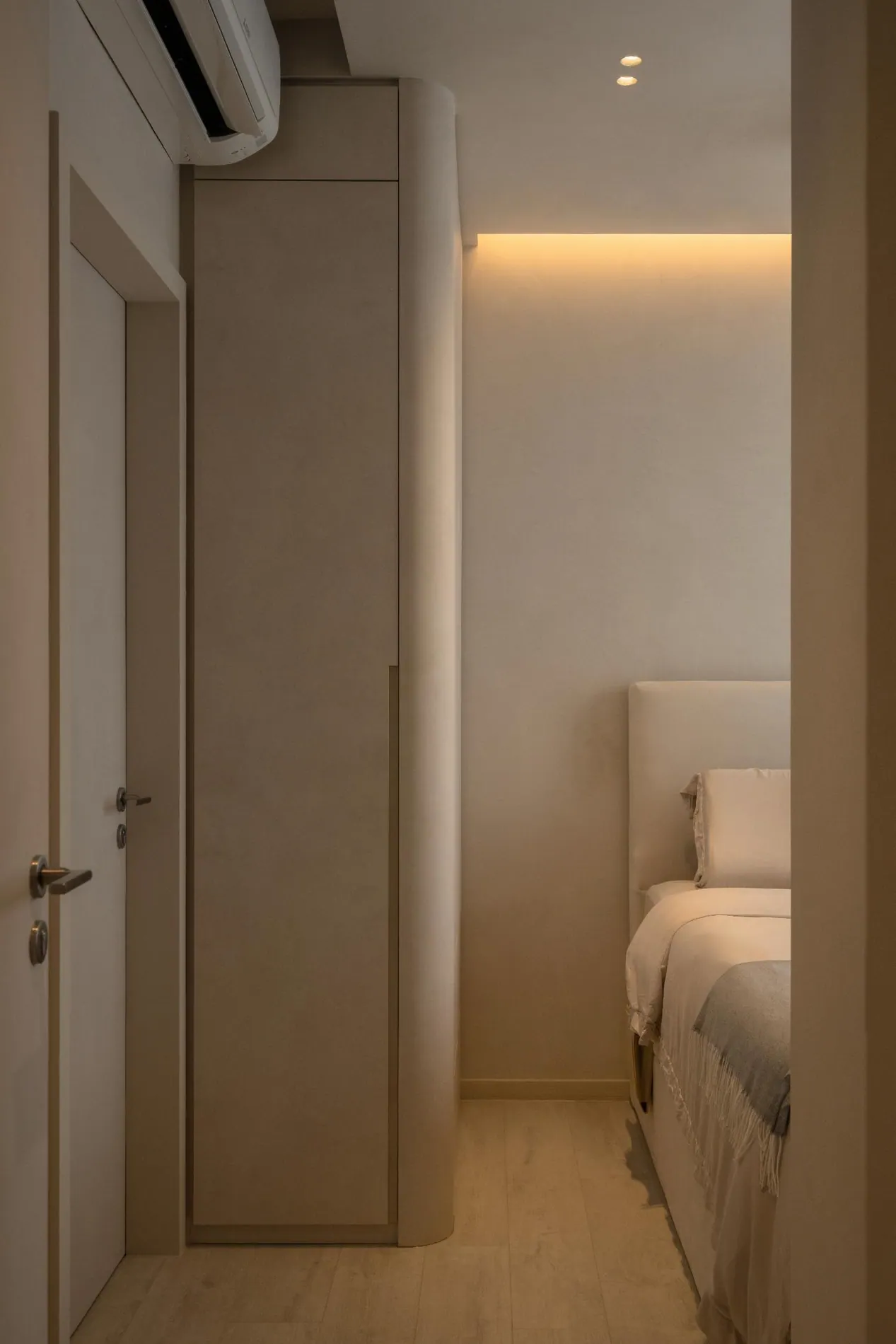
Within the dense rhythm of the city, this 700-square-foot home at Treasure at Tampines unfolds as a deliberate pause. Designed by OVON Design in a modern Wabi-sabi language, the two-bedroom residence reimagines compact living as something softer, slower, and deeply intentional. Created for a couple, the home is at once a private sanctuary and a professional setting for a home-based facial treatment studio — a duality resolved not through division, but through flow.
From the outset, the design intent was clear: to create a space that gently counterbalances the pace of urban life. Rather than imposing a strong stylistic statement, the interior is shaped around calm continuity. Light tones, rounded forms, and seamless surfaces work together to form an environment that feels expansive and composed, quietly elegant rather than overtly styled. The home does not announce itself. It invites you to exhale.
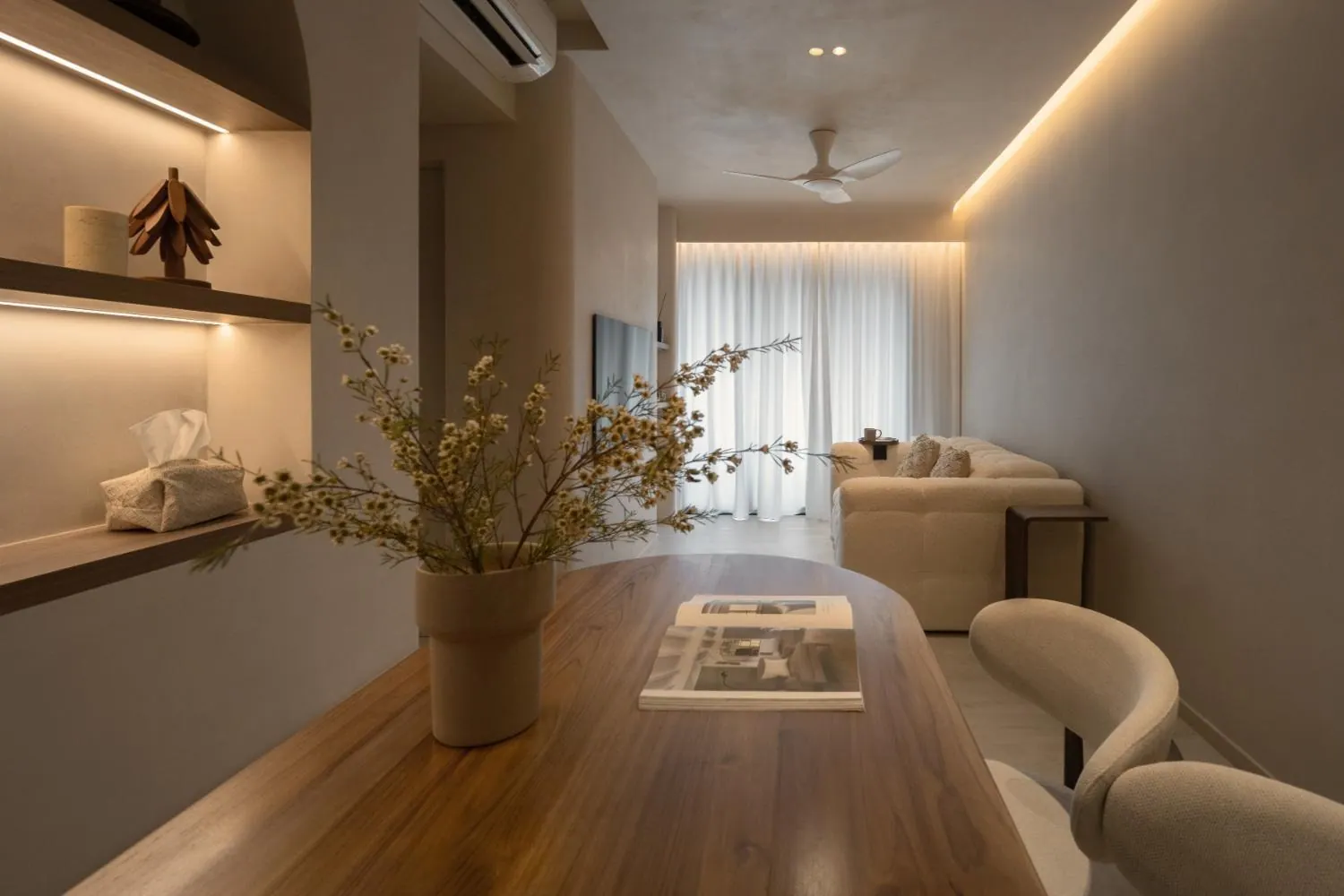
One of the project’s primary challenges lay in balancing two very different functions within a single domestic footprint. The space needed to feel intimate and personal for everyday living, yet reassuring and professional for clients visiting the facial studio. OVON Design addressed this through thoughtful zoning without hard separations. Instead of walls and doors, the home relies on permeable partitions, visual layers, and adaptable spaces that shift naturally throughout the day.
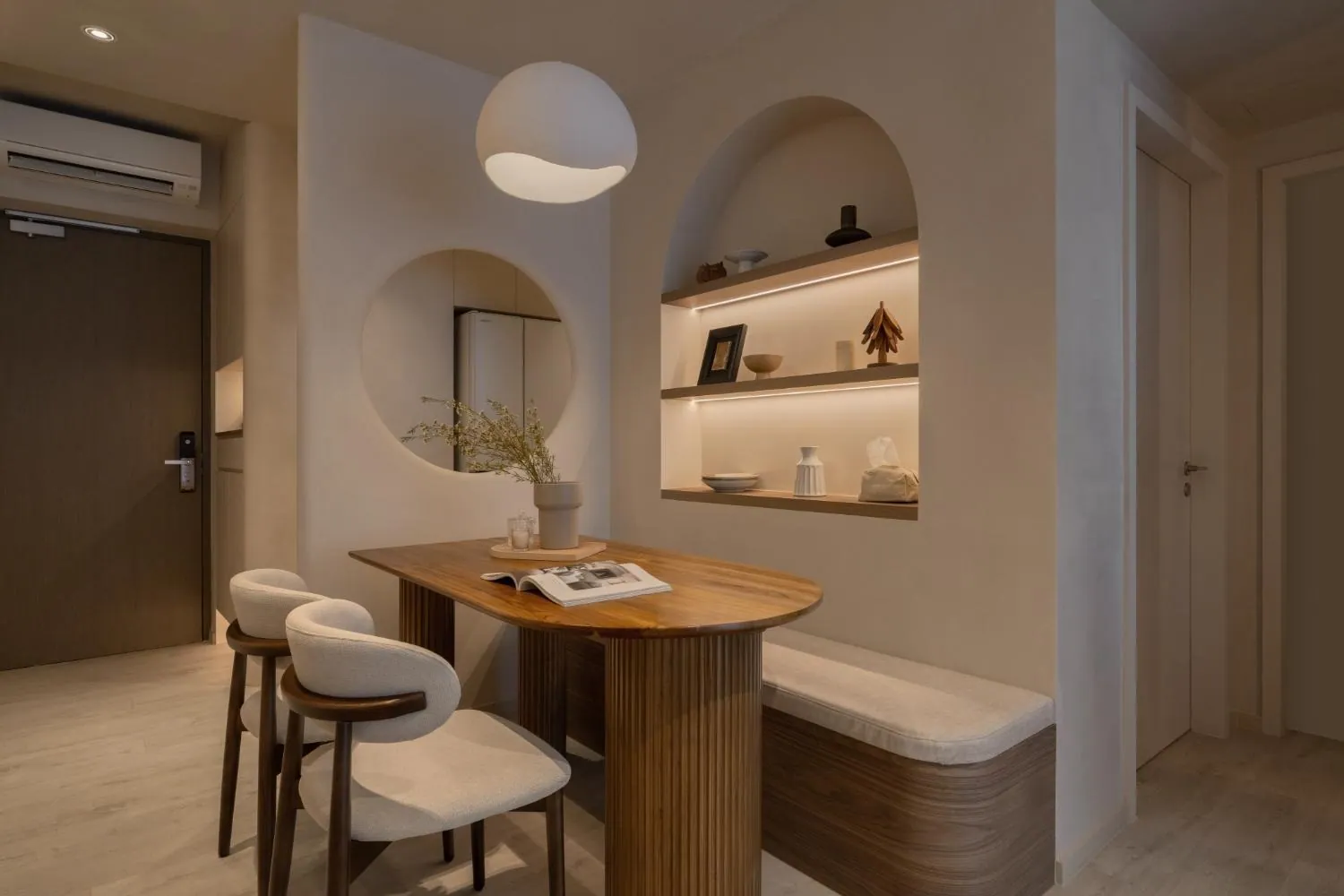
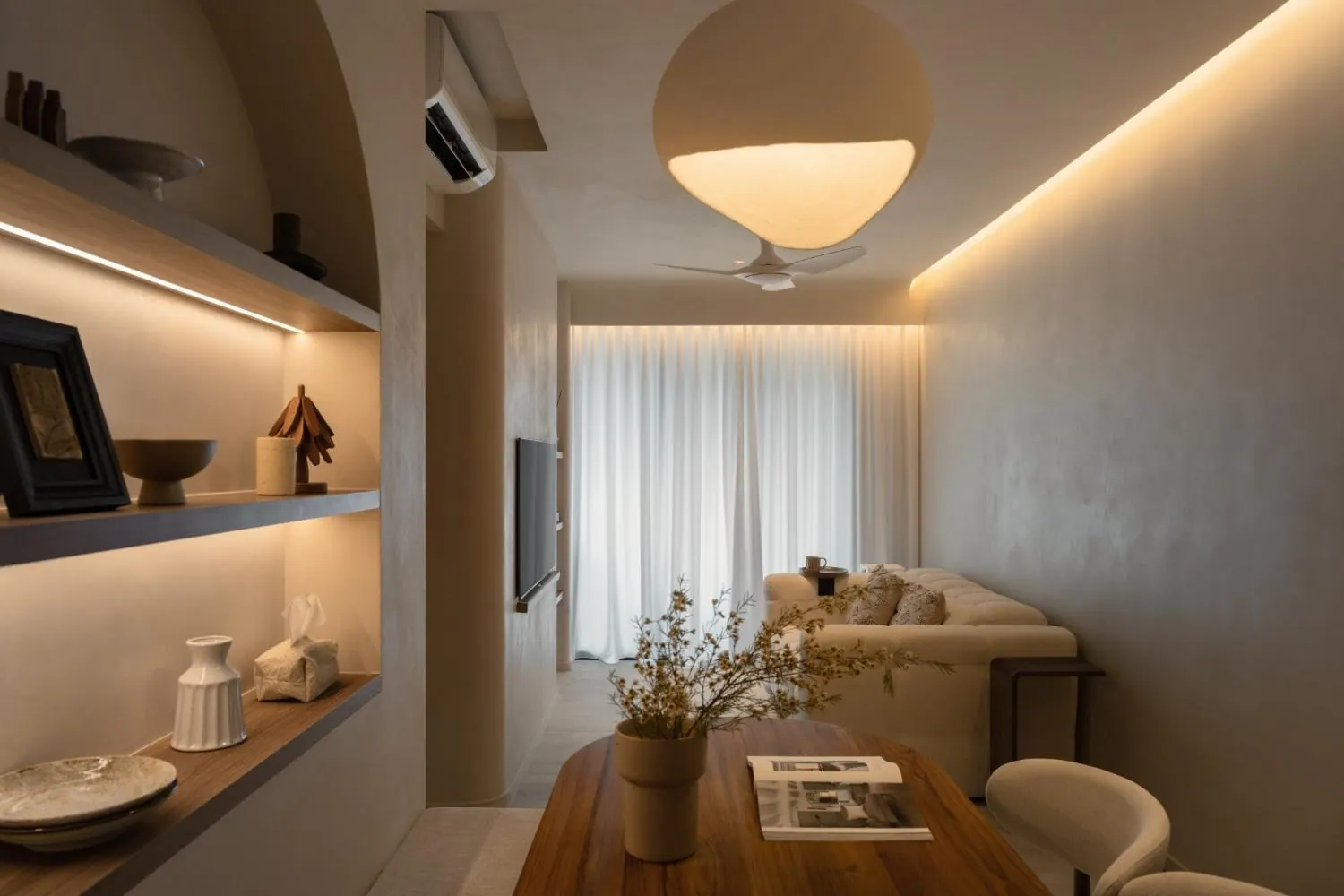
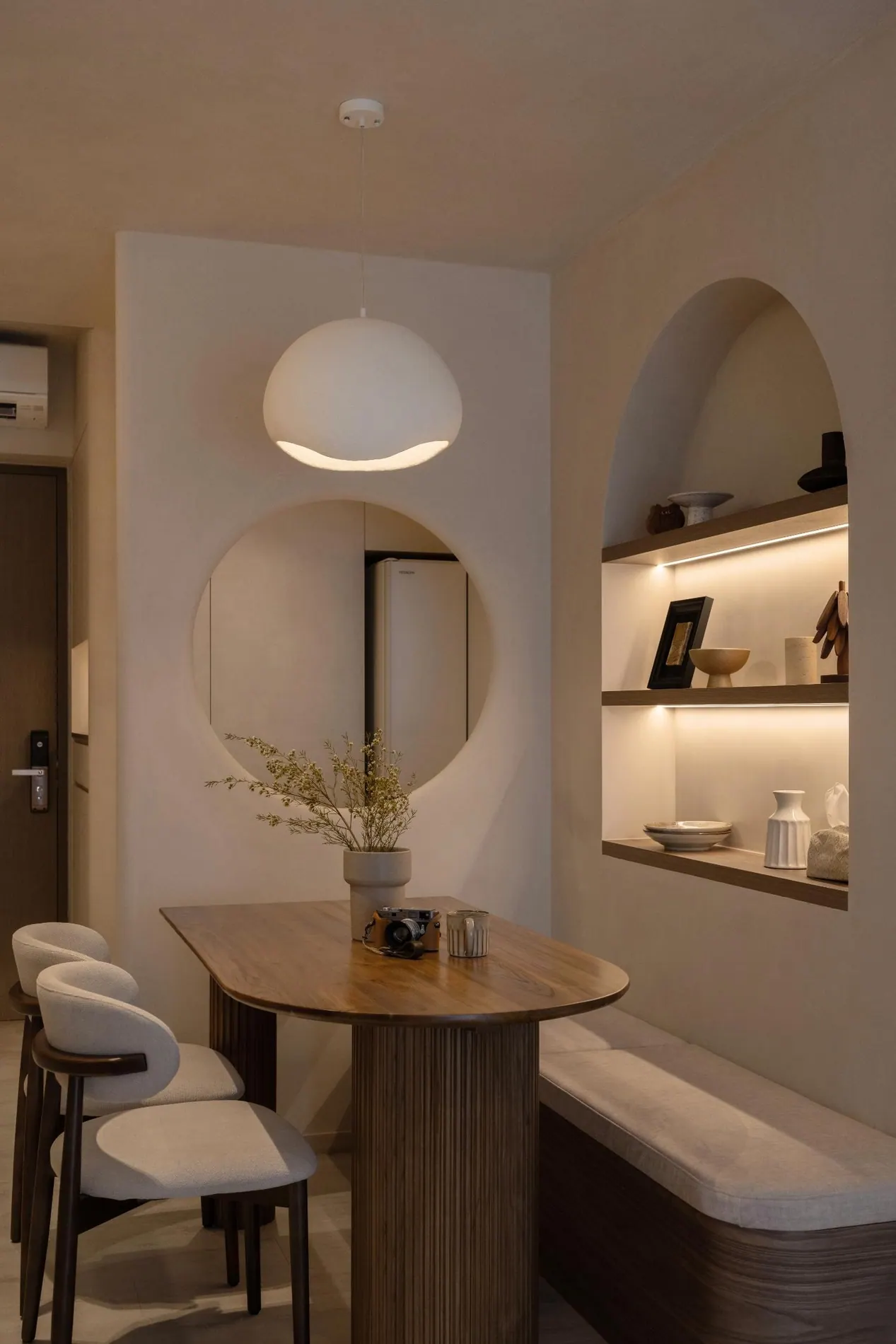
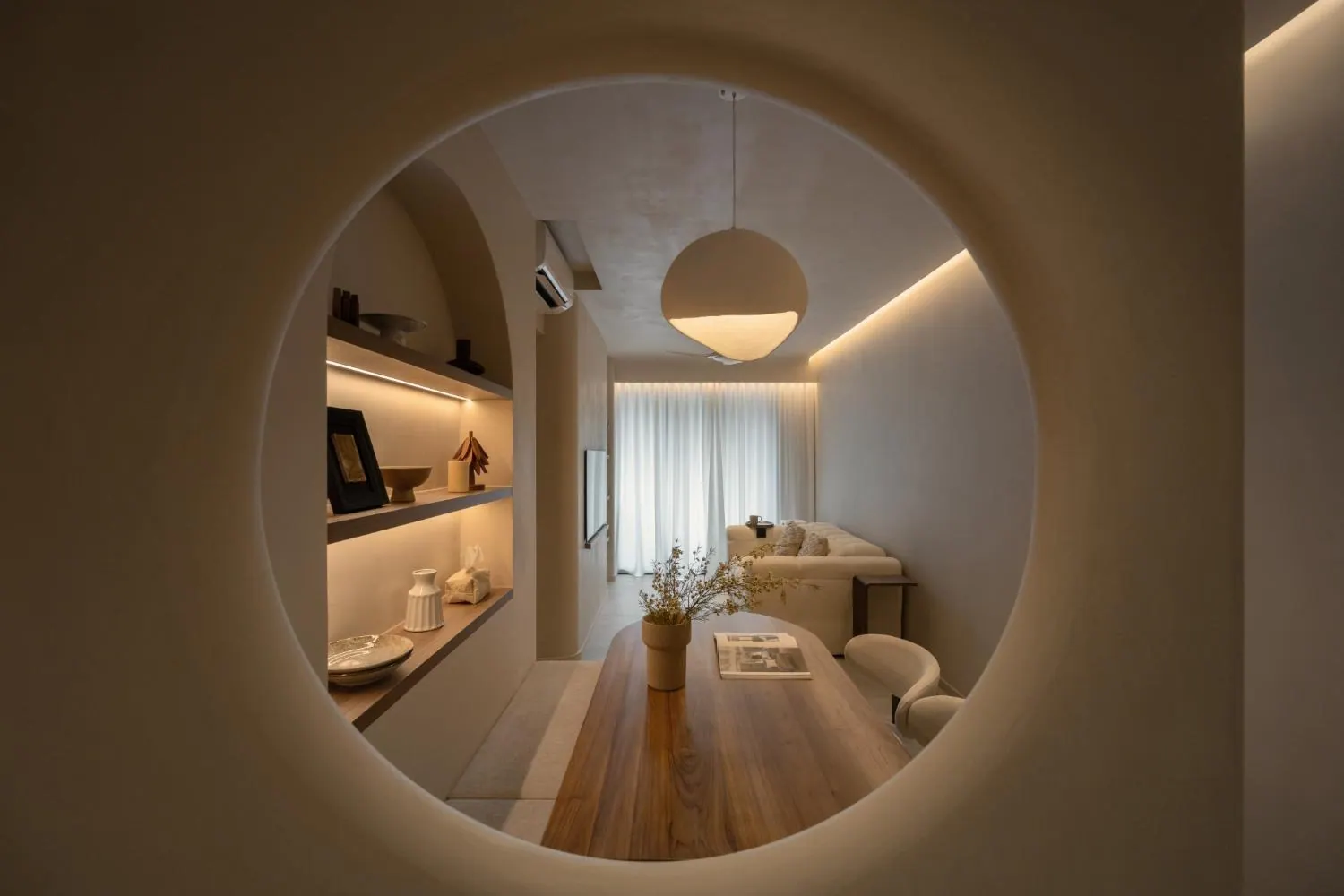
The dining area, for instance, doubles as a waiting space for clients, seamlessly transitioning between personal and professional use. Light-filtering elements maintain privacy while preserving openness, allowing daylight to travel freely across the home. This approach ensures that no part of the space feels compromised or out of place — every zone remains connected, yet distinct in its purpose.
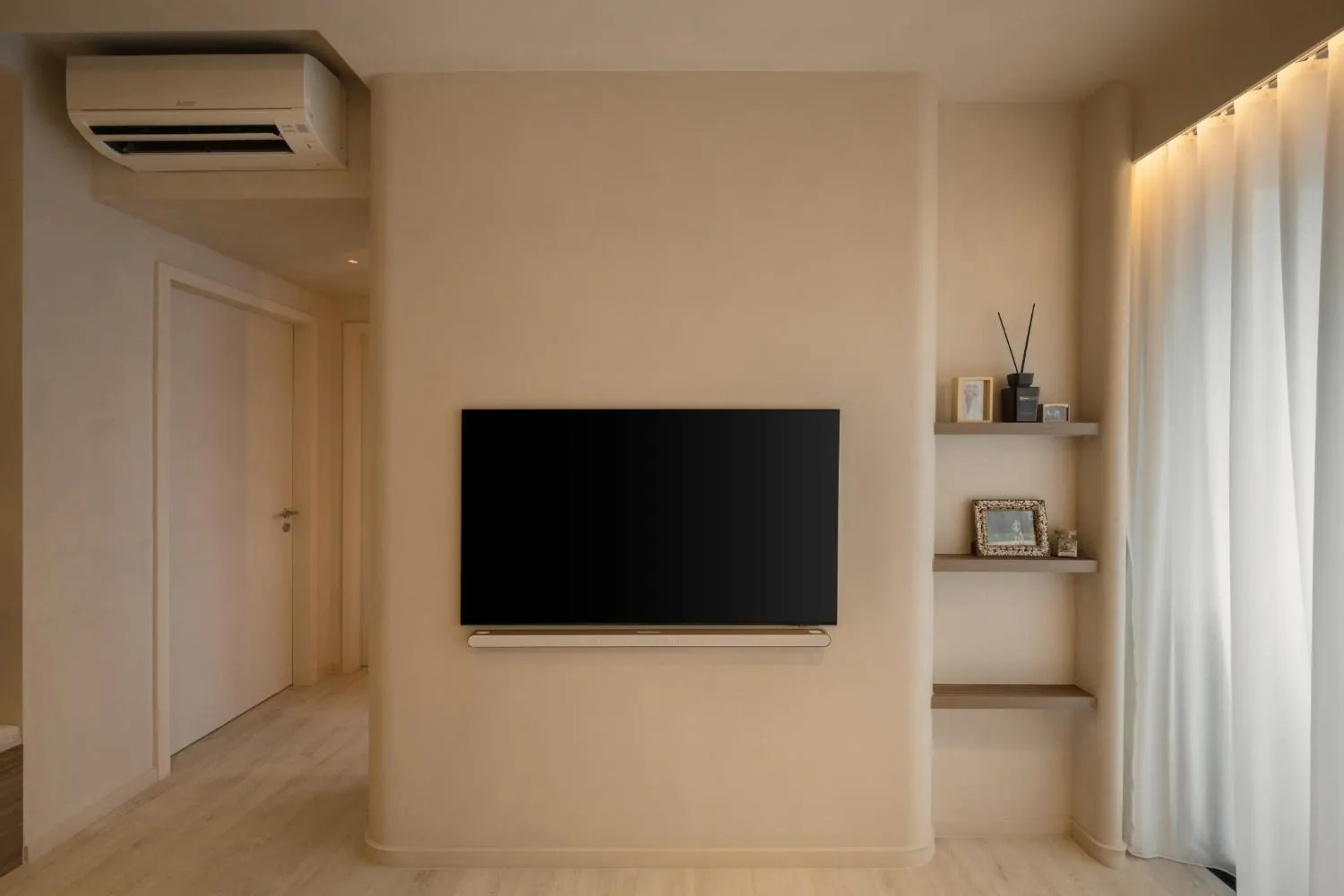
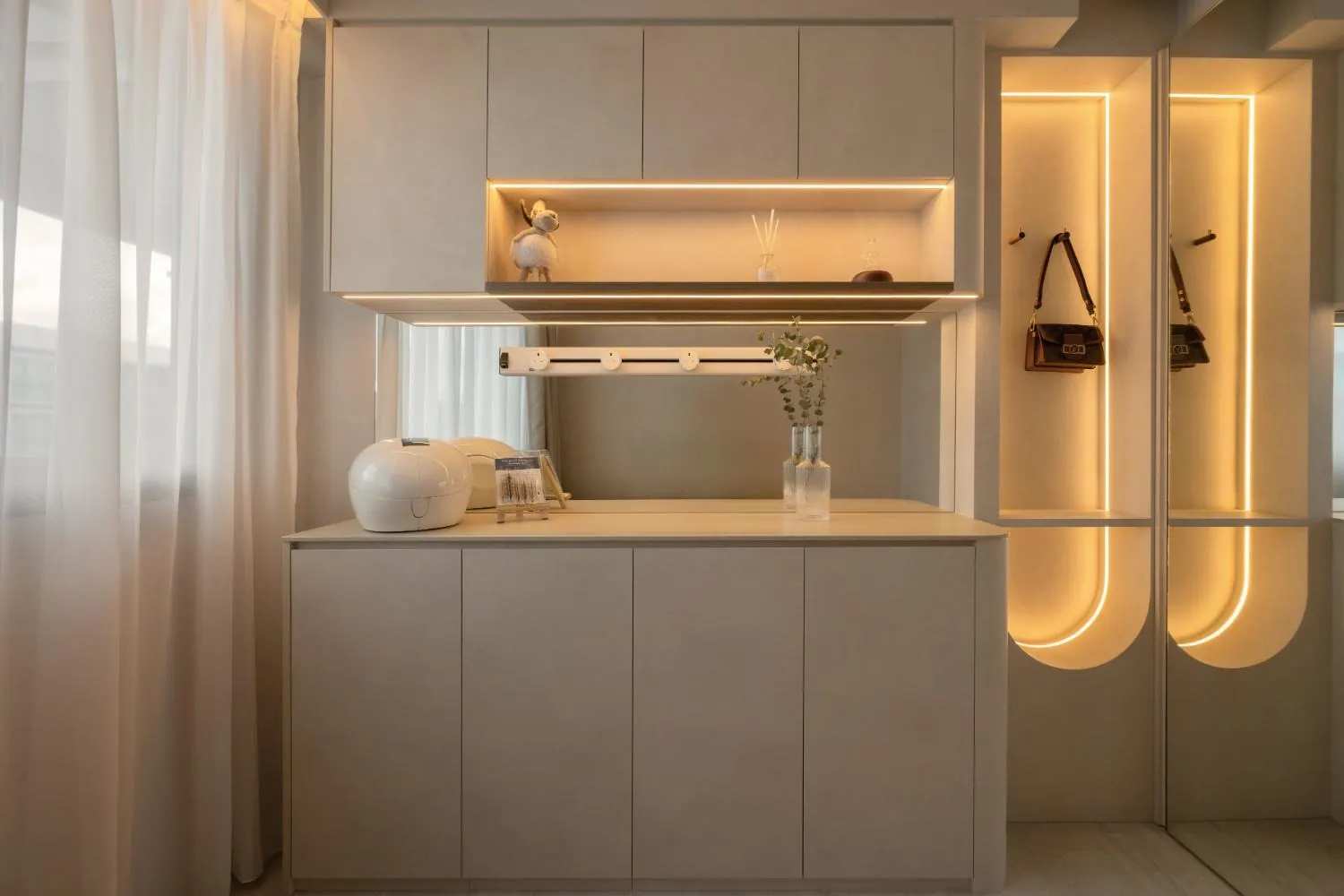
A defining signature of the project is its consistent use of curves. Rounded edges soften transitions between spaces, guiding movement gently rather than directing it rigidly. From circular partition cut-outs to curved niches and lighting features, these forms introduce a sense of visual continuity and emotional ease. In a compact home, such curves are not merely aesthetic gestures; they help dissolve sharp boundaries, encouraging a more fluid experience of space.
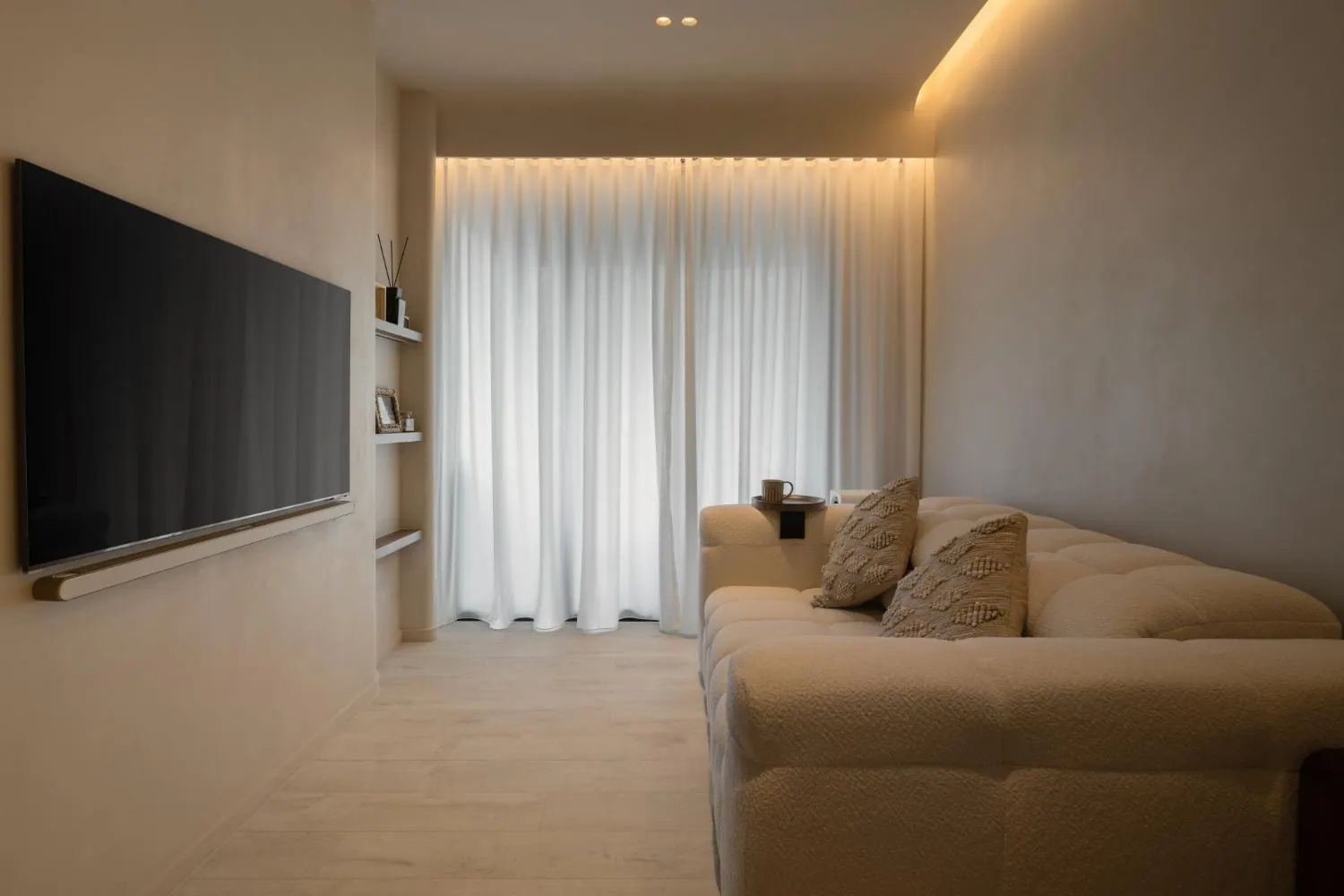
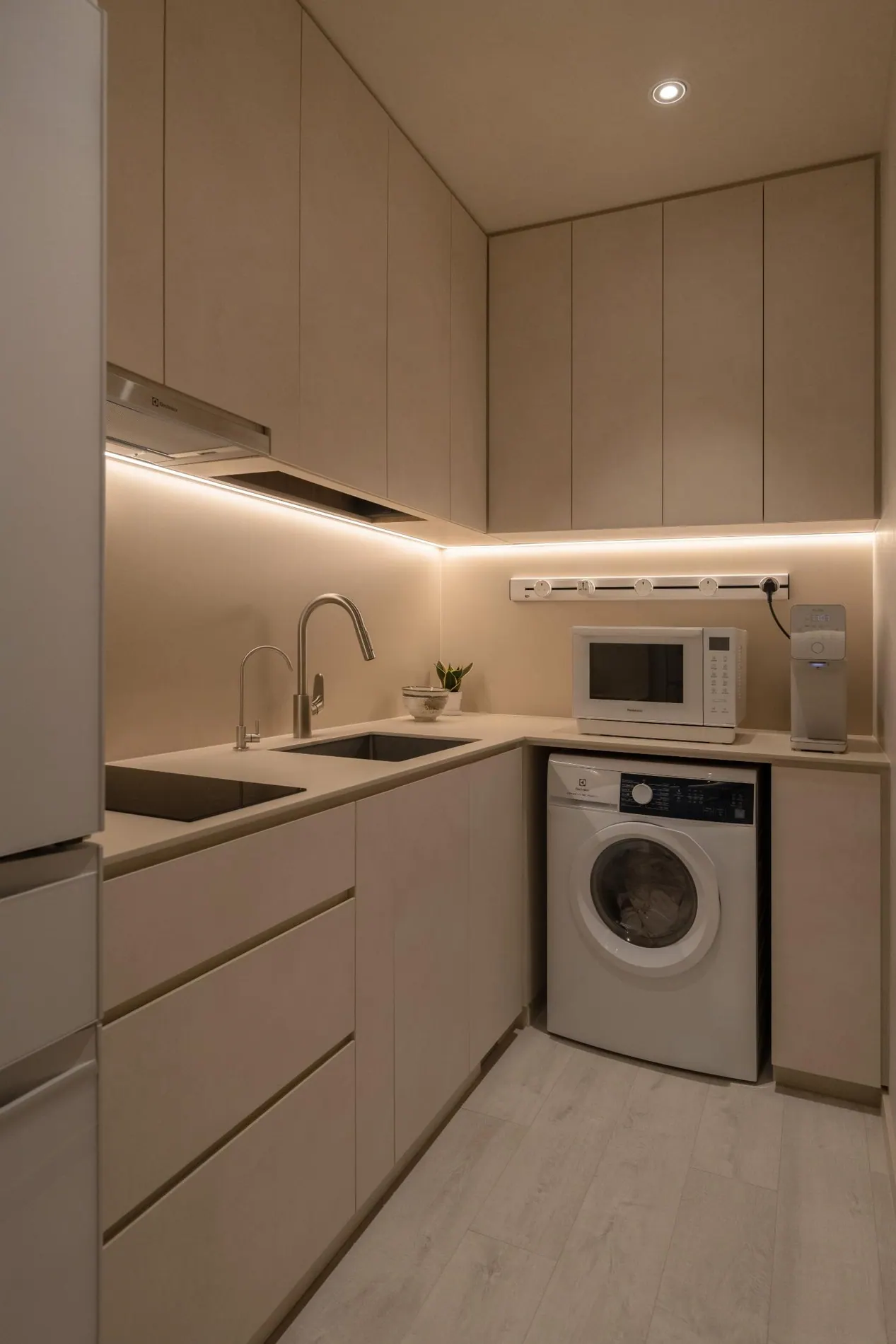
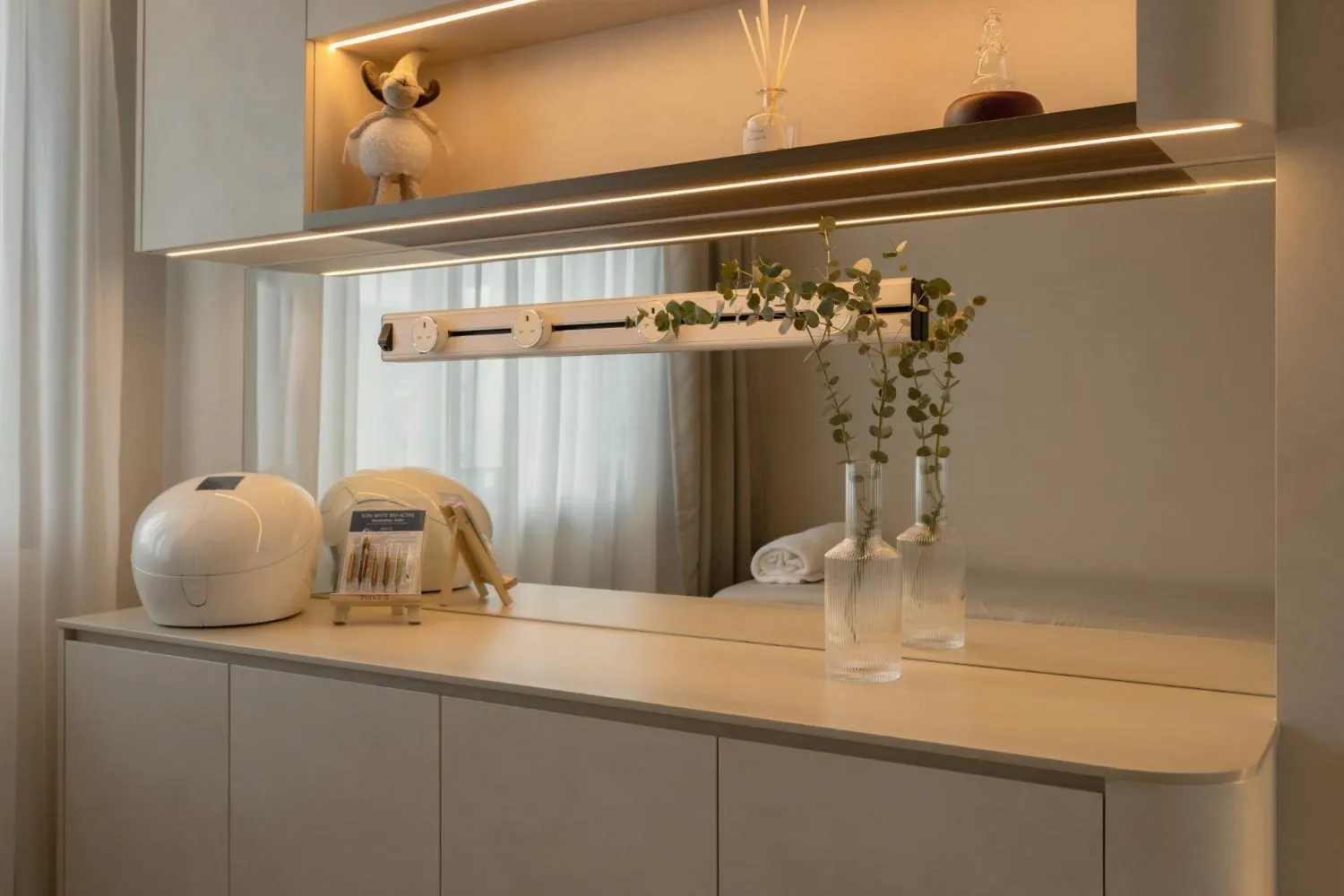
Materiality reinforces this softness. The palette is deliberately restrained, centred on beige limewash walls and microcement-look cabinetry. These finishes create an airy, seamless backdrop that visually enlarges the home while maintaining an understated character. Texture replaces contrast, and subtle tonal variation takes precedence over colour. Light reflects gently off surfaces, amplifying the sense of calm and allowing the architecture to recede into the background.
Client collaboration played a key role in shaping this atmosphere. OVON Design began the process by listening closely — not only to functional requirements, but to the emotional qualities the homeowners were drawn to. Through careful translation of these preferences, the design evolved into a space that reflects their lifestyle with quiet clarity. Every element was considered in relation to daily rituals, professional needs, and long-term comfort, ensuring cohesion without rigidity.
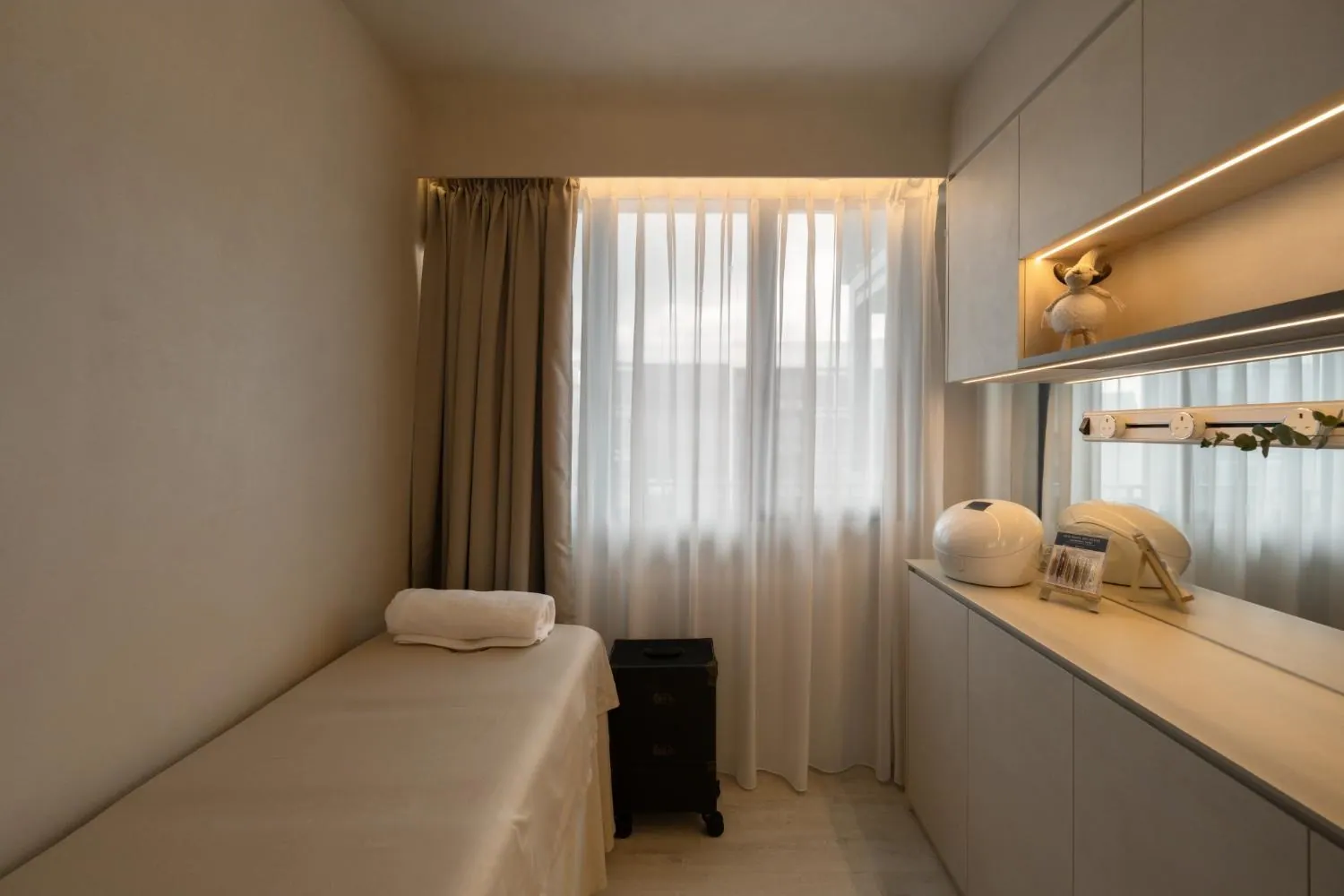
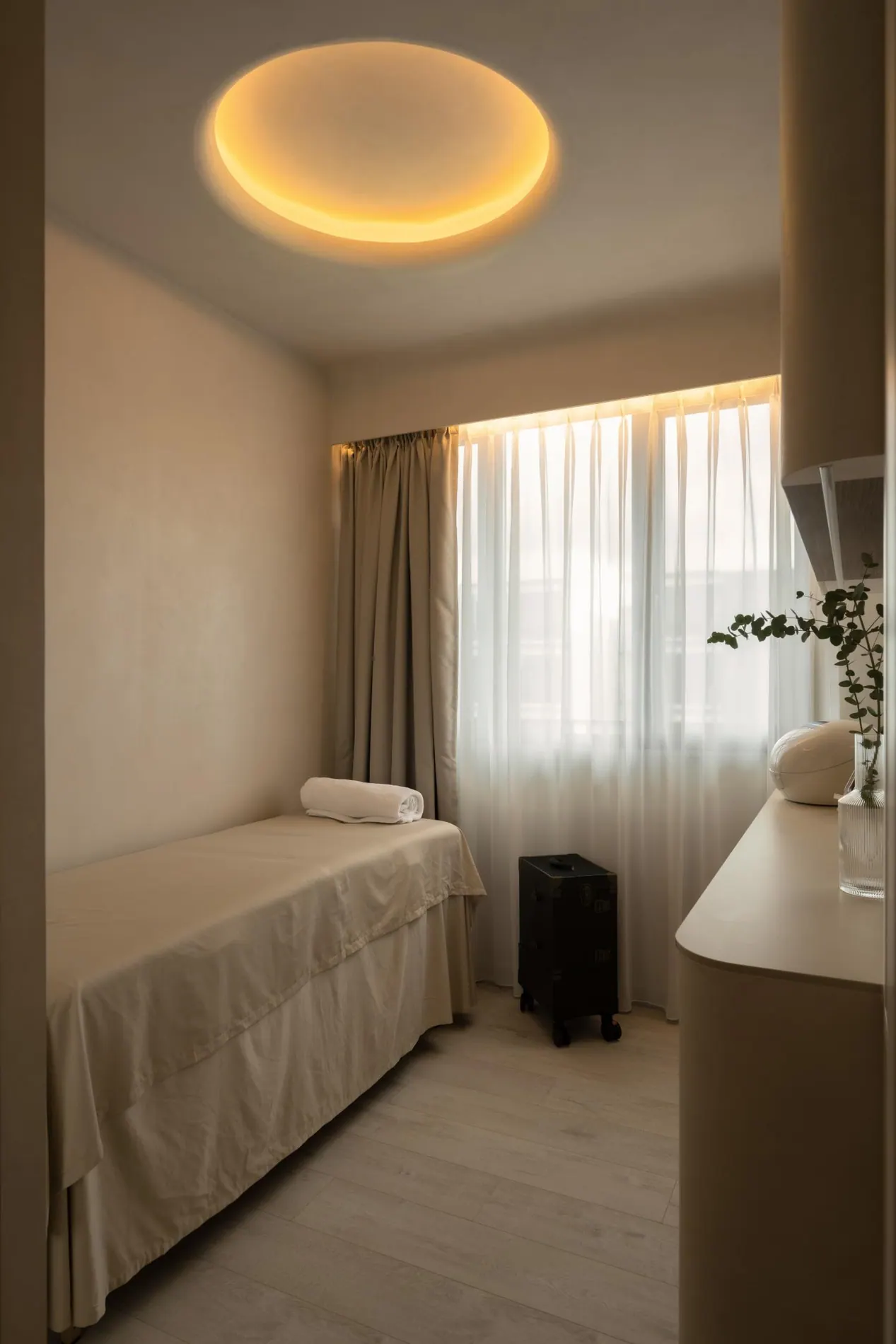
The facial treatment room stands as the most intimate expression of this design philosophy. Despite its compact size, the room feels open and composed. A sliding full-length mirror door enhances both light and visual depth, subtly expanding the space while offering a practical function for clients. A softly lit niche provides a moment of transition — a place to set belongings down and mentally shift into rest. Overhead, circular cove lighting becomes a gentle focal point, offering something calming to rest one’s gaze on during treatments. The room is designed not just to function, but to reassure, soothe, and slow the senses.
Lighting throughout the home is treated as an emotional tool rather than a purely functional one. Integrated and indirect sources soften edges and create depth, reinforcing the home’s wellness-driven intent. There is no harsh illumination, no visual urgency. Instead, light moves quietly through the space, changing subtly across the day and supporting different modes of use.
This project reinforced a key lesson for the design team: emotional experience matters as much as spatial efficiency, especially when a home must accommodate both personal and professional life. Curves, lighting, and seamless materials shape how a space feels long before how it looks. When thoughtfully applied, subtle design choices can transform even the smallest footprint into a place of restoration.
The impact of the home is felt immediately. For the homeowners, it functions as a retreat — a space to decompress, reset, and reconnect. For clients, it offers a welcoming, calming environment that builds trust and comfort from the moment they arrive. The home encourages slower movement, quieter moments, and a greater awareness of presence.
Looking ahead, this project reflects broader shifts in interior design, particularly within dense urban contexts like Singapore. Homes are increasingly required to support evolving lifestyles, blurring the boundaries between living and working. As such, flexibility, thoughtful zoning, and seamless transitions will continue to define the future of residential design. Equally important is the growing emphasis on wellness-driven interiors — spaces designed not just for efficiency or aesthetics, but for emotional restoration.
At Treasure at Tampines, OVON Design has crafted a home that embodies this direction with restraint and sensitivity. It is a space where imperfections are softened, transitions are gentle, and design serves as a quiet backdrop to daily life. A modern Wabi-sabi interior that does not seek attention, but offers something far more lasting: calm, continuity, and a sense of pause within the everyday.
Explore OVON Design’s profile ↗