
There are cafés that serve coffee, and then there are spaces that hold time.
BYD by 1826 Café at Zhongshan Park belongs firmly to the latter. Conceived as more than a hospitality venue, the project unfolds as an experiential interior, one that quietly recalibrates the relationship between brand, place, and community. Designed by Le Interior Affairs, the café sits within the greenery of the park not as an interruption, but as an extension of it. A pause. A gathering point. A place where movement softens and moments stretch.
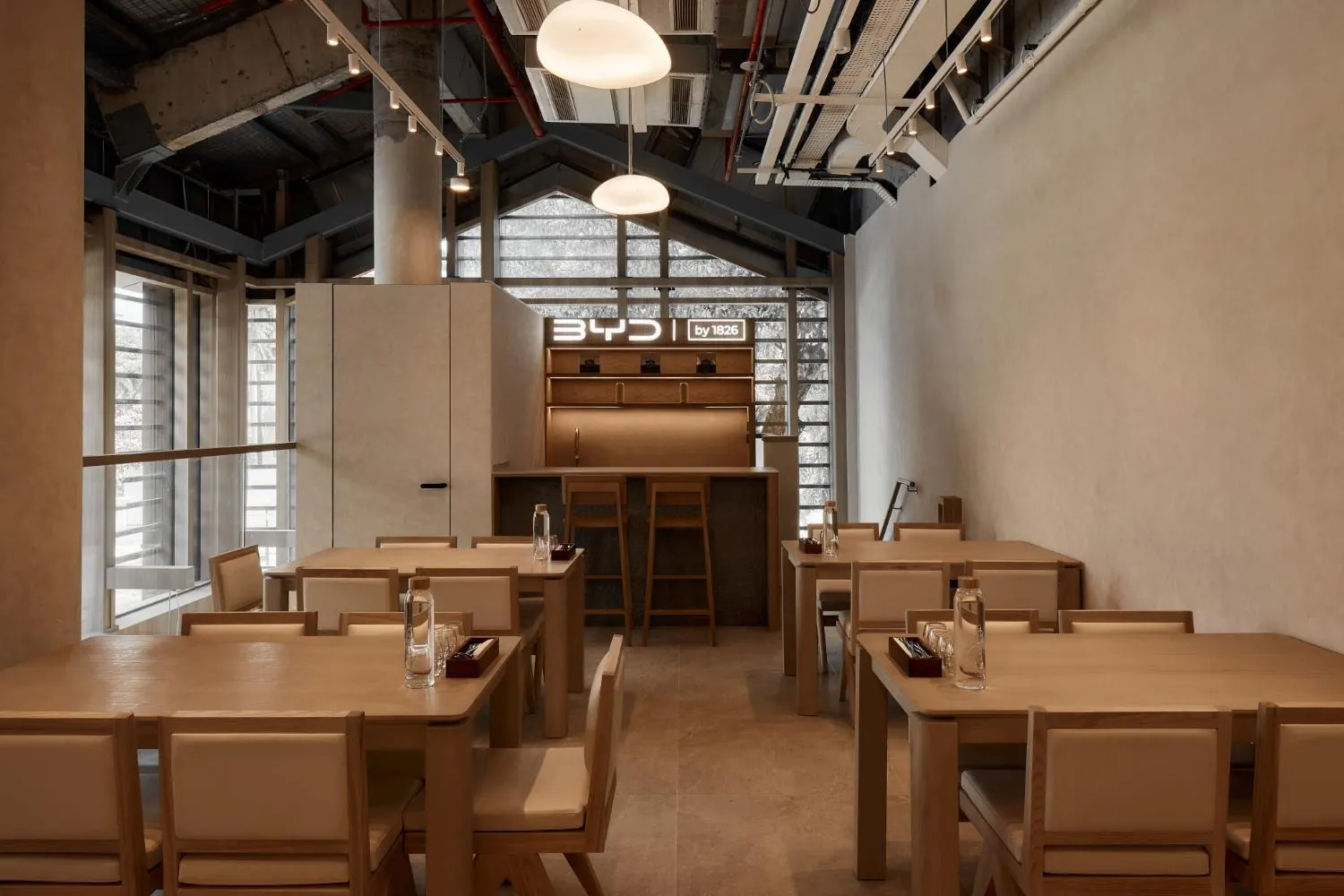
From the outset, the intention was clear: this would not be a café designed for turnover, but for lingering. For conversations that wander, laptops that stay open, pets that curl beside chairs, and light that changes slowly across surfaces. The design resists spectacle in favour of atmosphere, allowing warmth, tactility, and spatial clarity to take centre stage.
An Interior Rooted in Experience
The creative process began not with form, but with behaviour. How do people enter, move, sit, and stay? How does comfort manifest not just physically, but emotionally? These questions shaped every decision, from circulation paths to seating density, from material durability to the rhythm of light.
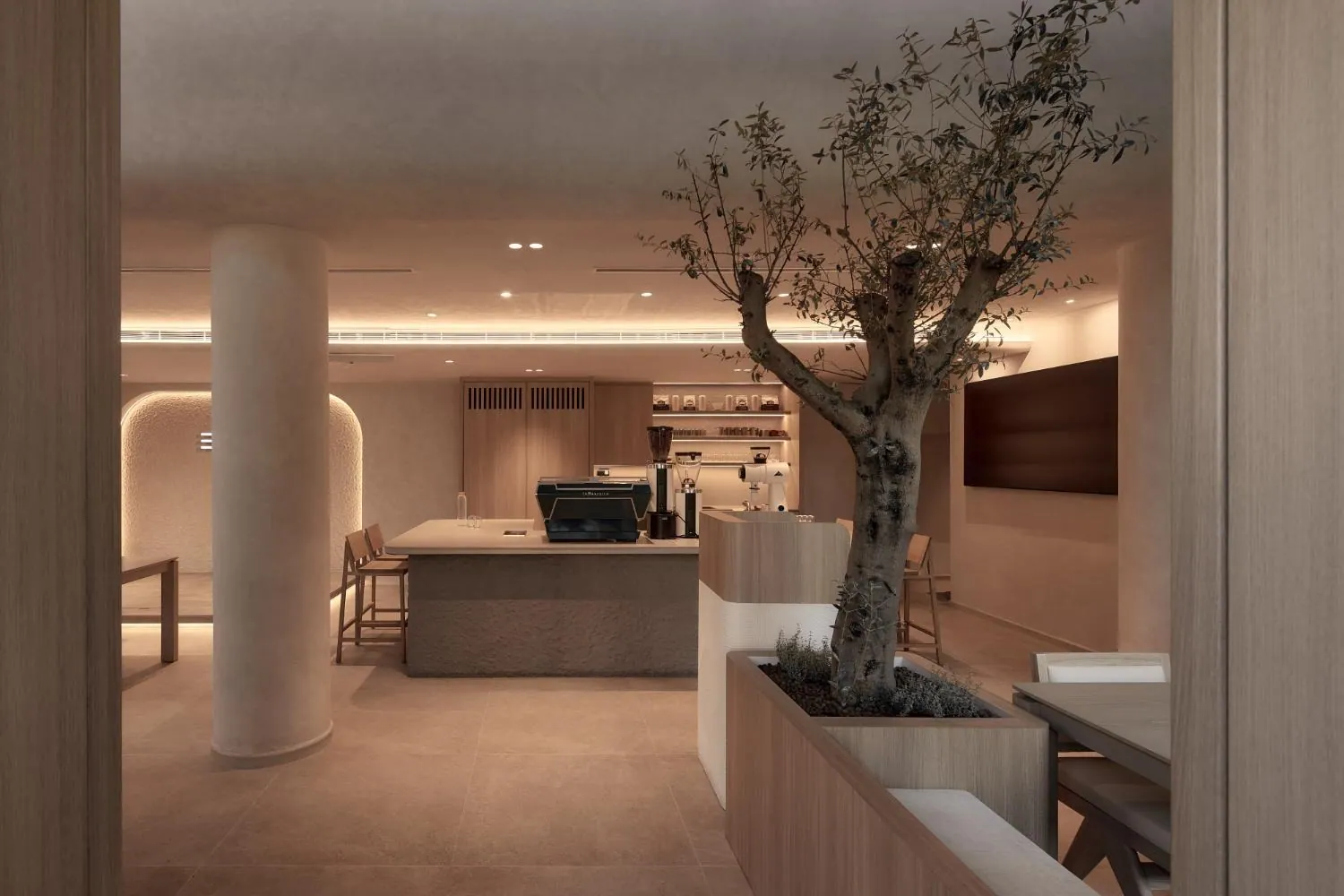
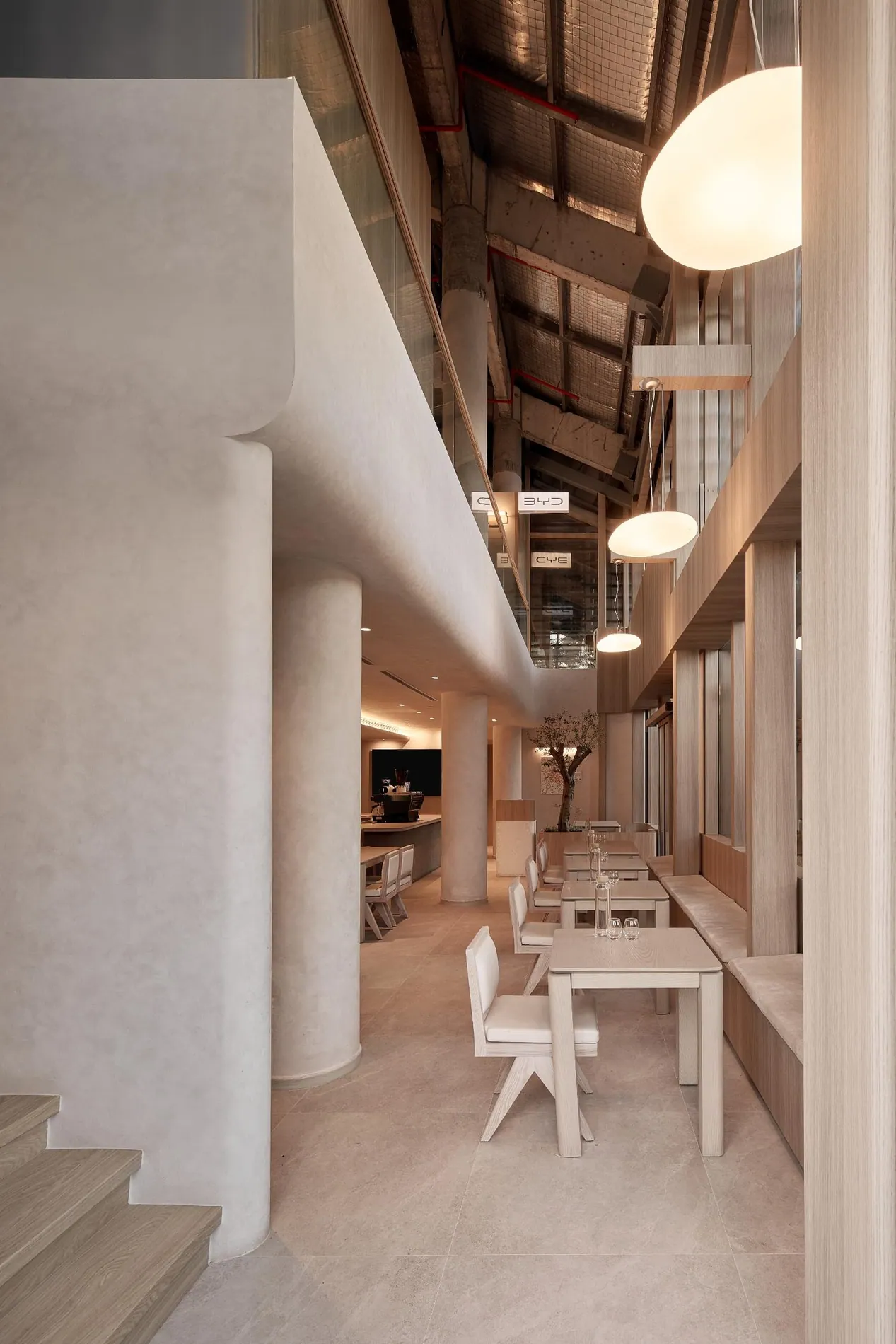
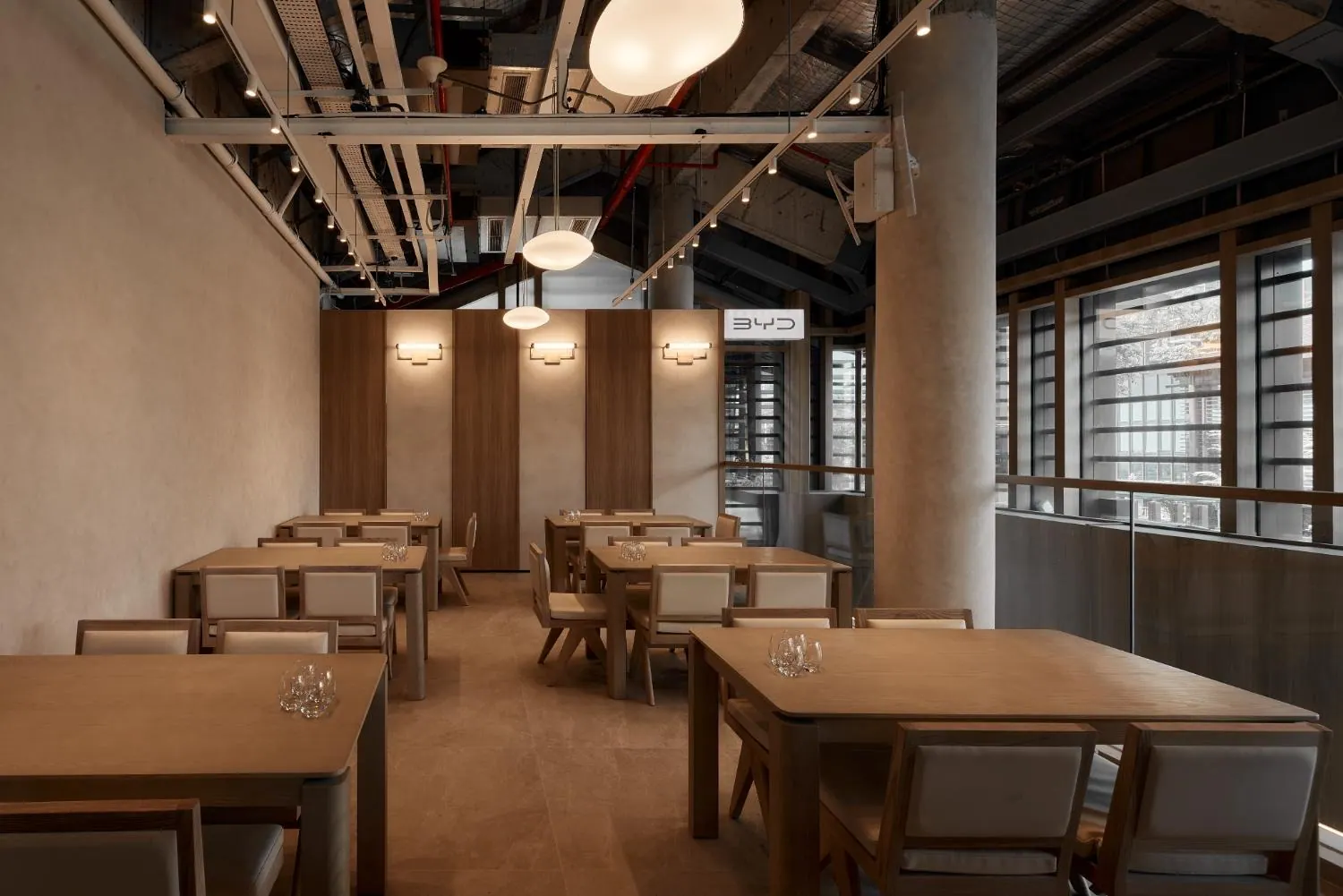
As a pet-friendly café, inclusivity became a guiding principle. The layout is intentionally generous, with clear sightlines and fluid movement that accommodate both human and animal traffic without friction. Seating is arranged to feel relaxed rather than regimented, offering a variety of postures and proximities, whether one arrives alone, in pairs, or with a group. The result is a space that feels intuitive, almost effortless, in the way it supports everyday rituals.
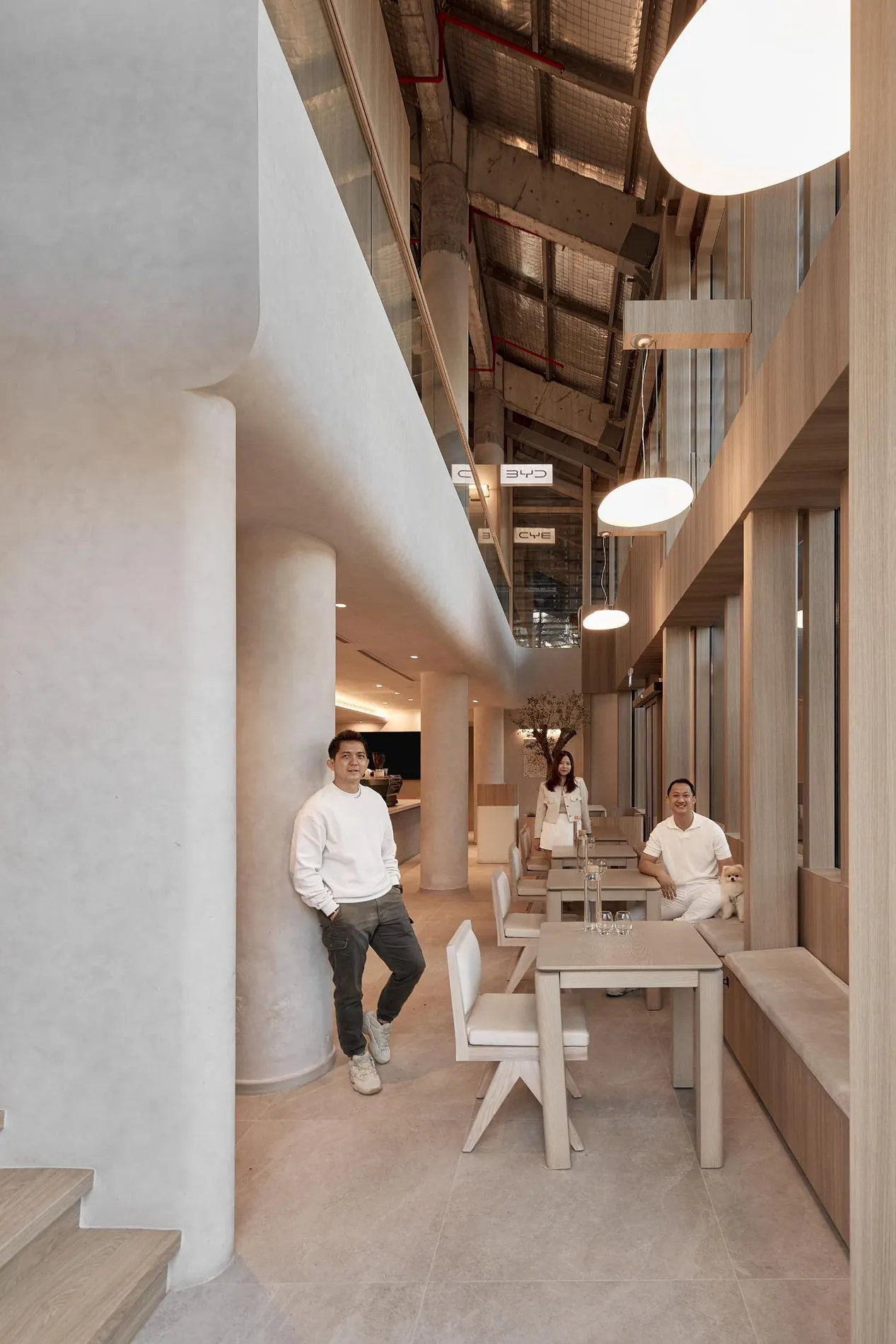
Rather than imposing a singular focal point, the café reveals itself gradually. Views open and close. Volumes expand and compress. There is a quiet choreography at play, encouraging exploration while maintaining a sense of calm.
Challenges of Time and Function
One of the project’s most defining constraints was time. Working within a tight schedule, the design team had to prioritise decisiveness without sacrificing nuance. This challenge was compounded by the functional demands of a pet-friendly environment, where material choices, cleanliness, and safety needed to coexist seamlessly with a refined aesthetic.
The solution lay in precision. Circulation was meticulously planned to prevent bottlenecks. Finishes were selected not only for their visual softness, but for their resilience under high traffic. Details were stripped back to what was essential, allowing clarity to replace excess. Through close coordination and disciplined decision-making, the space achieves a sense of ease that belies the complexity behind it.
Light as a Living Element
Perhaps the most distinctive signature of the project is its treatment of light. Natural daylight is welcomed generously through expansive glazing, framing views of Zhongshan Park and drawing the landscape into the interior. This visual connection anchors the café within its context, reinforcing its role as a social extension of the park rather than a sealed destination.
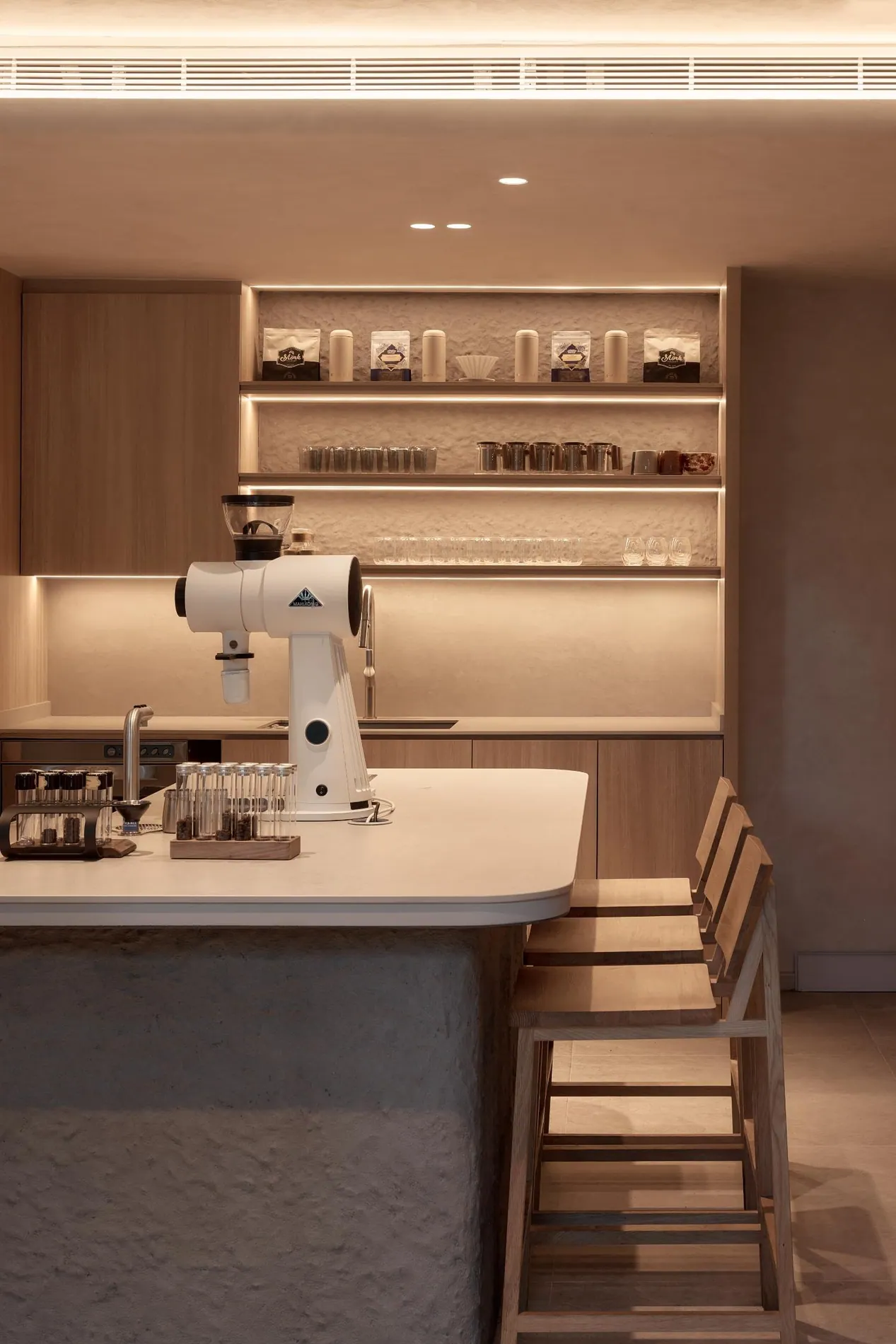
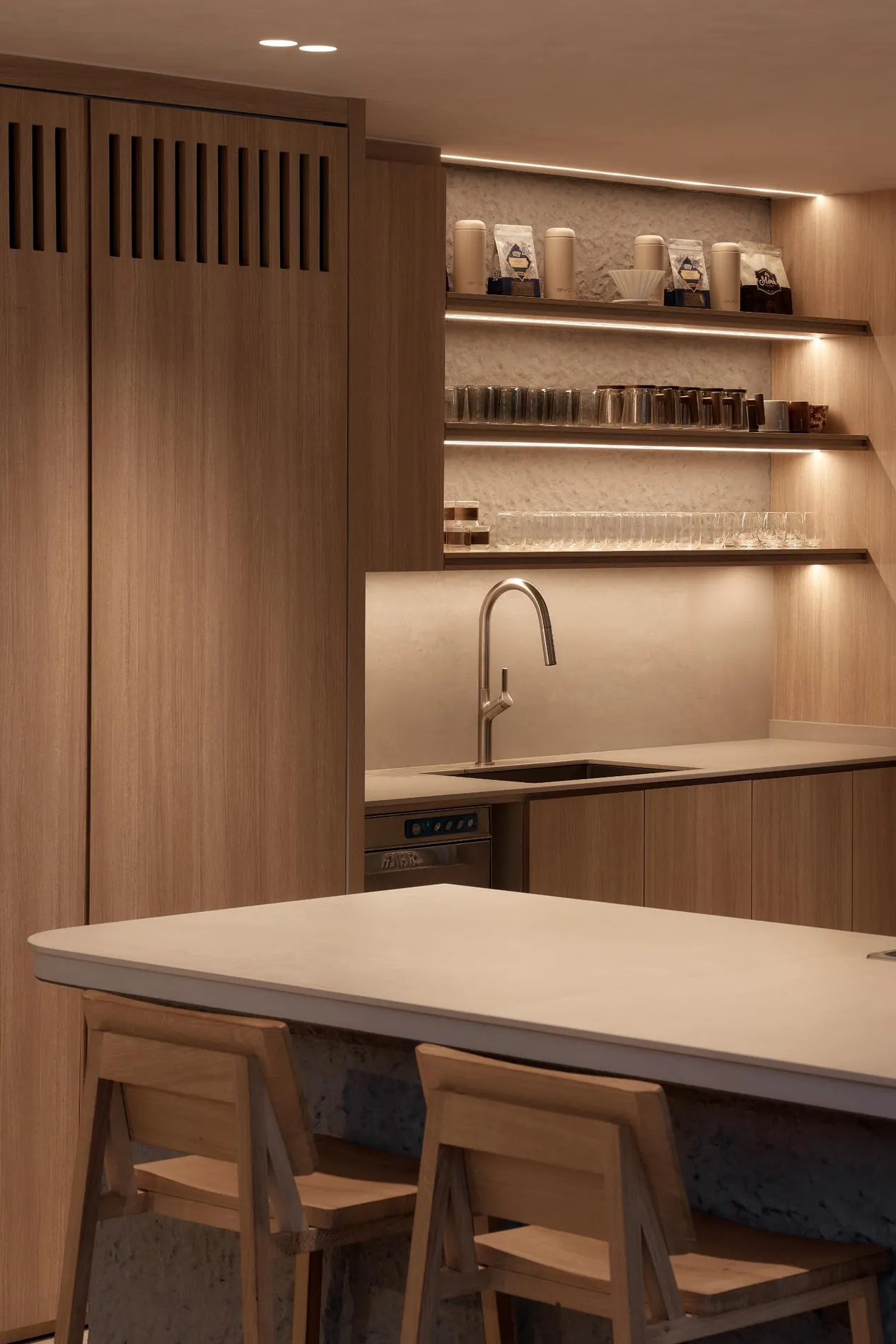
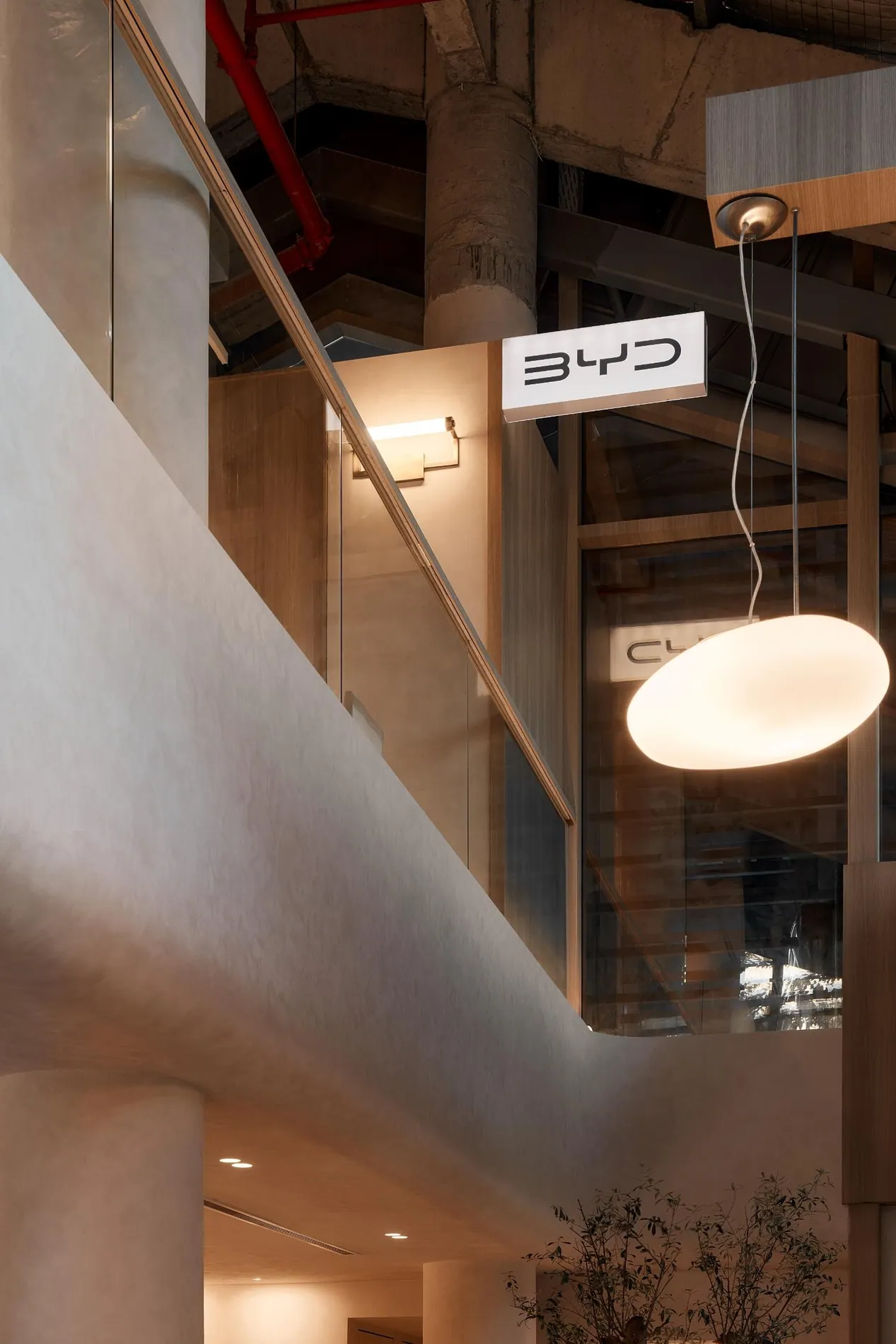
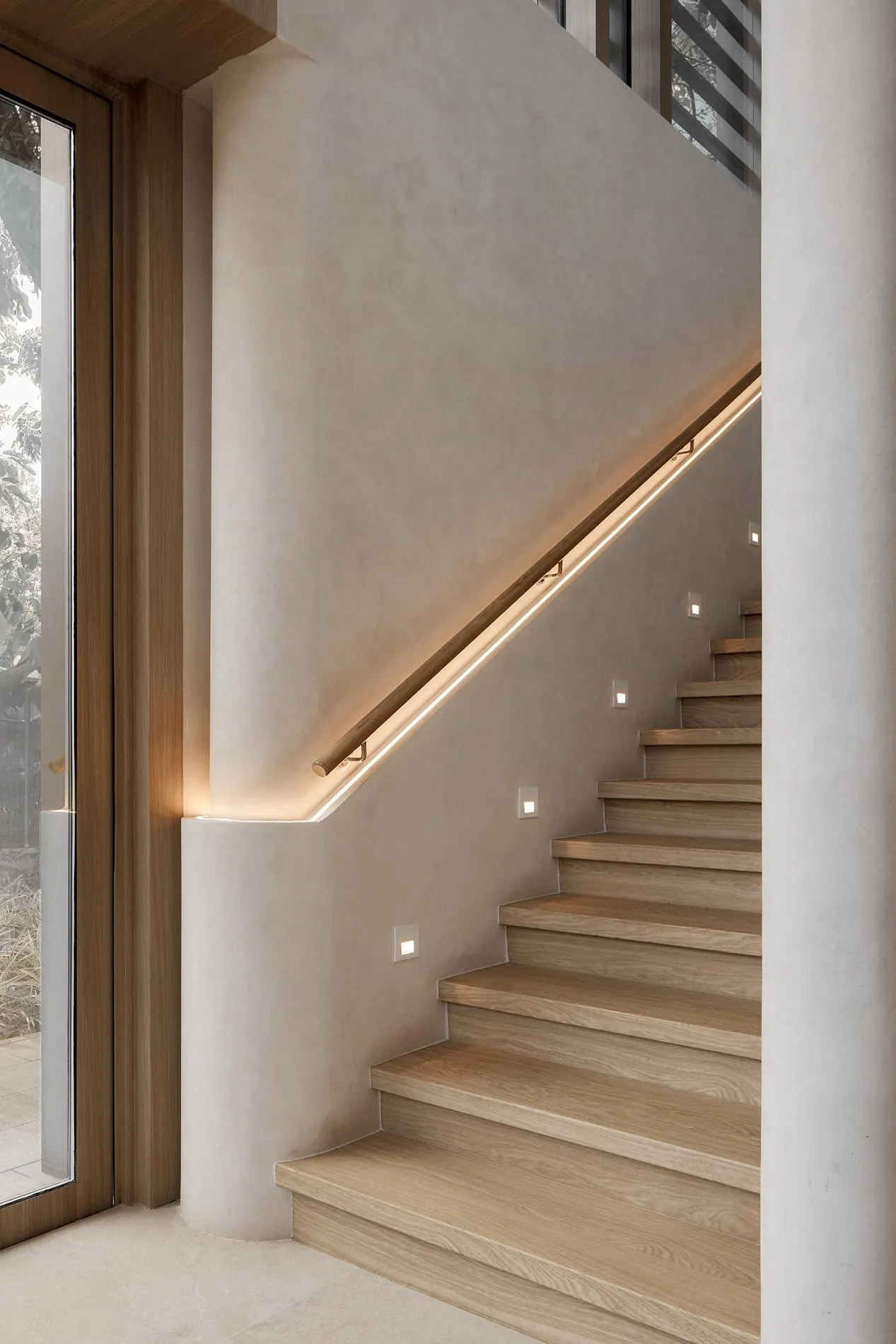
As daylight fades, an adaptive lighting system takes over with subtlety and intention. Tunable white lighting shifts throughout the day, transitioning from crisp and energising to warm and enveloping. The change is almost imperceptible, yet deeply felt, supporting comfort, mood, and circadian rhythm without theatricality.
This layered lighting strategy reflects Le Interior Affairs’ philosophy: that design should respond, not perform. Light here is not an accessory, but an atmosphere, one that evolves alongside the people who occupy the space.
Material Quietude and Timelessness
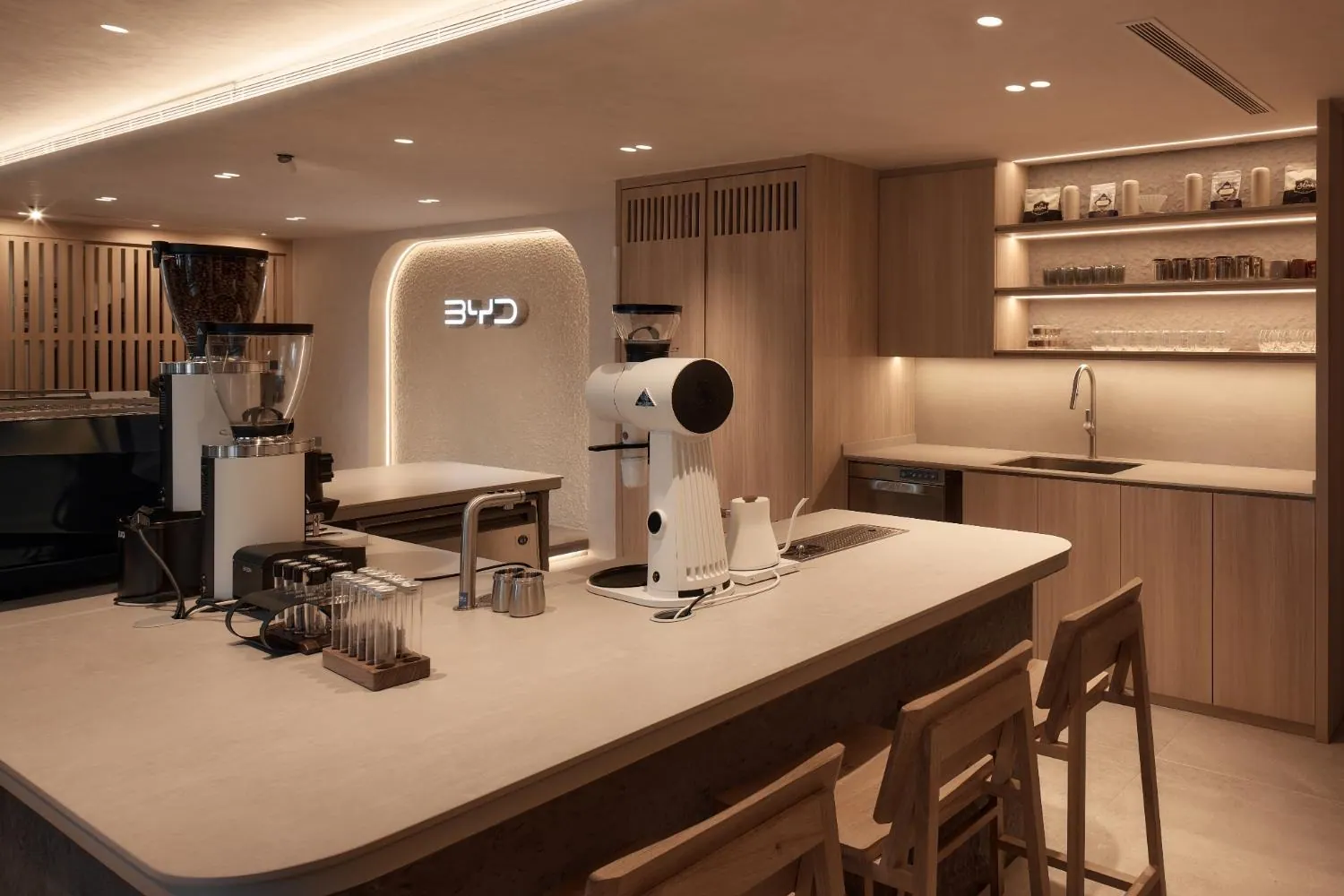
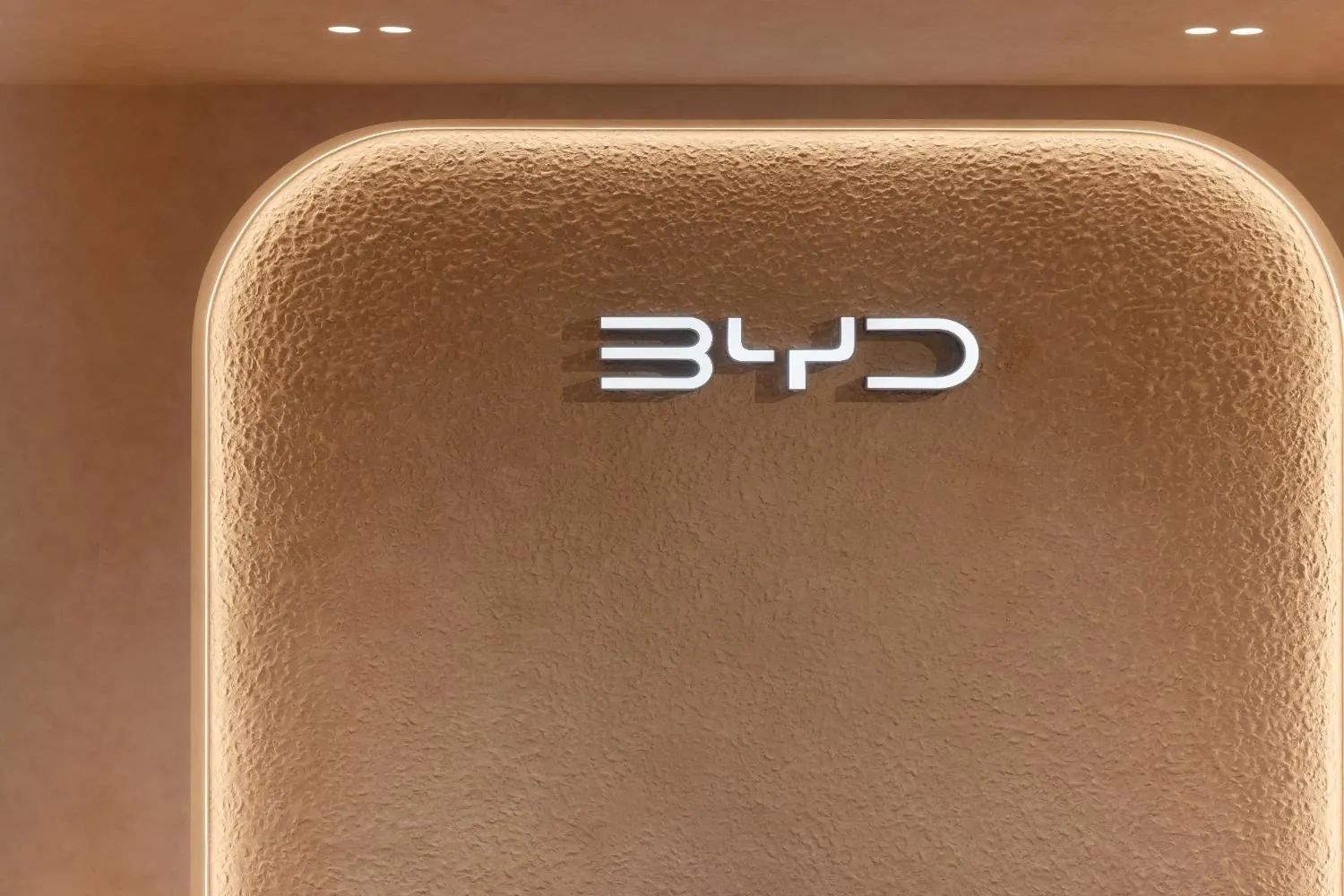
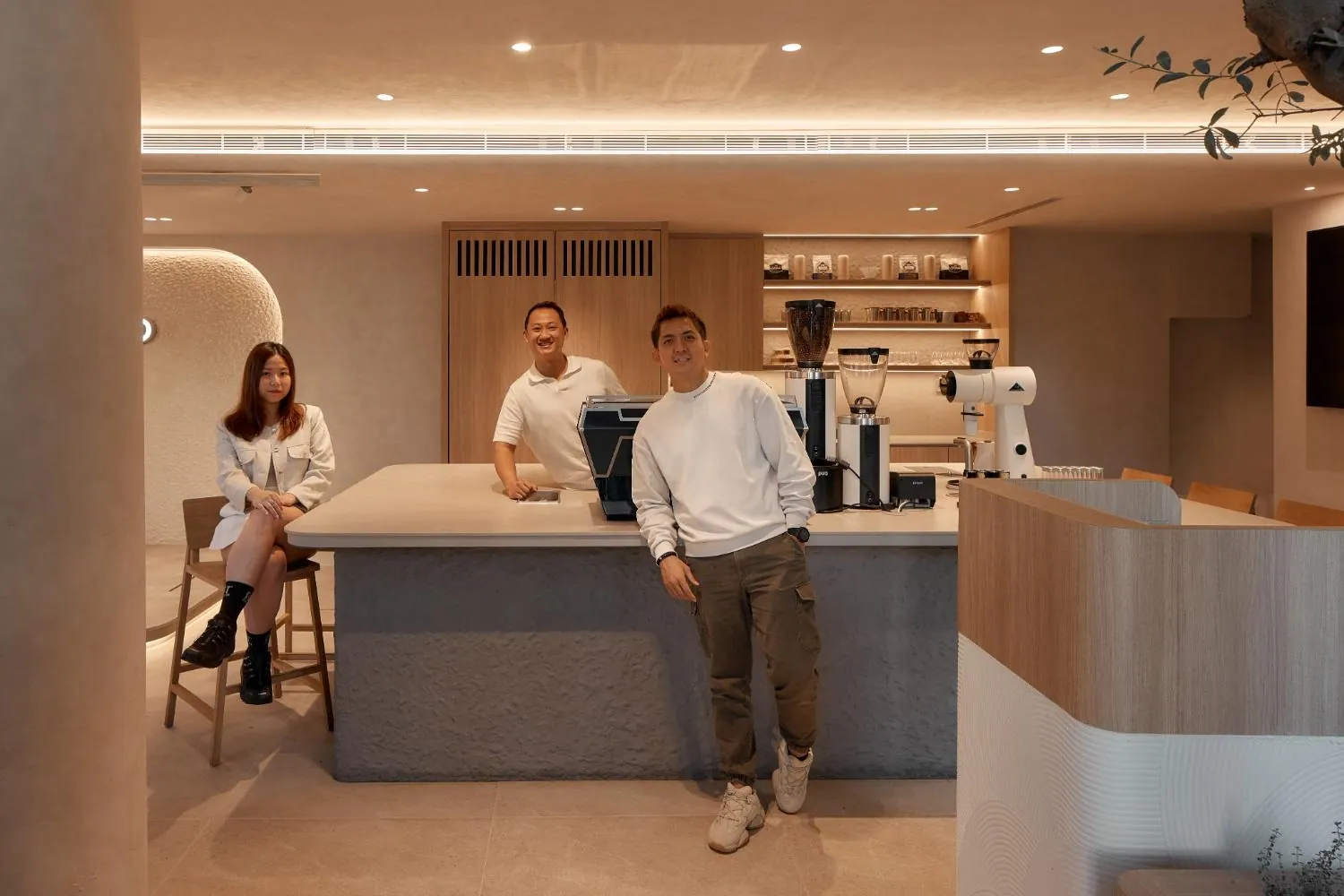
The material palette is intentionally restrained. Limewash finishes lend walls a soft, tactile depth, their irregularity catching light in a way that feels organic and lived-in. Warm timber elements ground the interior, introducing a sense of familiarity and calm. Together, these materials create a backdrop that is soothing rather than distracting, allowing human activity to remain the true focal point.
Every surface is chosen with longevity in mind. There is nothing overly precious, yet nothing disposable. The interior is designed to age gracefully, to accumulate patina and memory rather than wear. This sense of timelessness aligns with both the café’s hospitality function and BYD’s forward-looking brand ethos, interpreted here with restraint rather than literal reference.
A Collaborative Evolution
Client collaboration played a crucial role in shaping the final outcome. From the beginning, there was a shared vision of a hybrid space, one that balances openness and refinement while remaining aligned with BYD’s identity. Conversations centred on how automotive cues could be woven into the environment without overpowering its warmth or turning the café into a showroom.
Through an iterative process, adjustments were made to zoning, detailing, and spatial emphasis. Brand storytelling is present, but subtle, integrated into the architecture rather than applied as surface decoration. This collaborative spirit allowed the project to evolve beyond initial expectations, resulting in a space that feels cohesive, authentic, and quietly confident.
Sustainability Through Sensitivity
Innovation in the project is rooted in sensitivity rather than novelty. The adaptive lighting system not only enhances user experience but also supports energy efficiency by responding intelligently to natural light conditions. Material selections prioritise durability, reducing the need for frequent replacement and contributing to long-term sustainability.
These decisions reflect a broader understanding of sustainability as an experiential and operational consideration, not just a technical one. Comfort, longevity, and reduced waste are treated as interconnected values.
A Space That Gives Back
What makes BYD by 1826 Café particularly compelling is the way it gives back to its community. It functions as a social anchor, a place where different rhythms coexist: quiet mornings, animated afternoons, gentle evenings. The pet-friendly layout invites a broader audience, fostering inclusivity and shared experience.
The design does not dictate how the space should be used. Instead, it supports possibility. Work, leisure, conversation, solitude, all are equally accommodated. In doing so, the café becomes less about consumption and more about connection.
Reflections and Forward Thinking
Looking back, the project reaffirmed a fundamental truth: good design is not about aesthetics alone, but about experience. Hybrid environments demand a heightened awareness of emotional response, flexibility, and human behaviour. This project reinforced the importance of designing for meaning, not just function.
In many ways, BYD by 1826 Café offers a glimpse into the future of interior design. As boundaries between hospitality, retail, and lifestyle continue to blur, spaces will increasingly need to be adaptable, emotionally resonant, and human-centred. Light, material honesty, and experiential flow will play defining roles.
Here, Le Interior Affairs has created a space that feels both contemporary and enduring. A café that does not rush you. An interior that listens as much as it speaks. A place where design recedes just enough to allow life to take centre stage.
And in that restraint, it finds its power.
Explore Le Interior Affairs’s profile ↗