
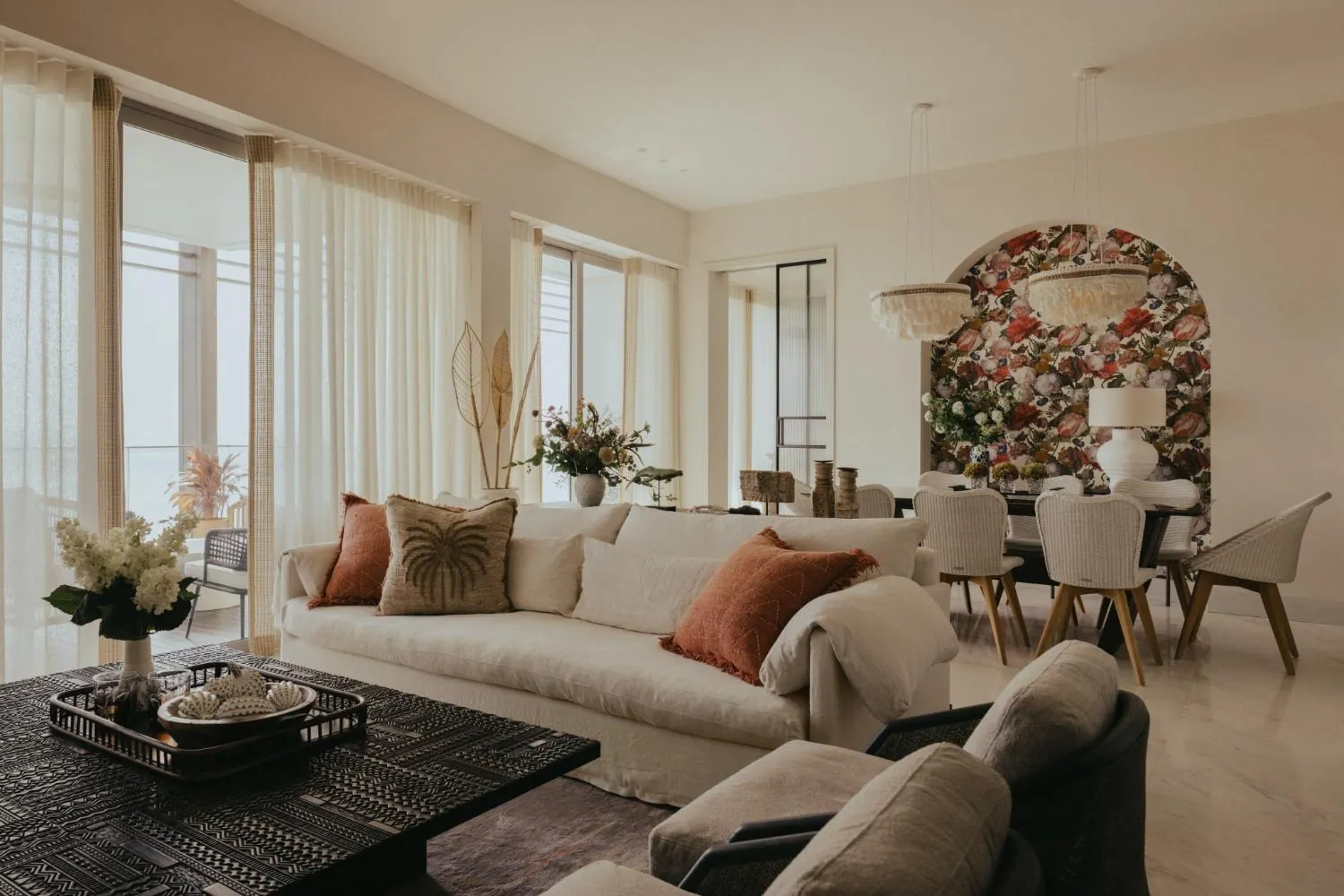
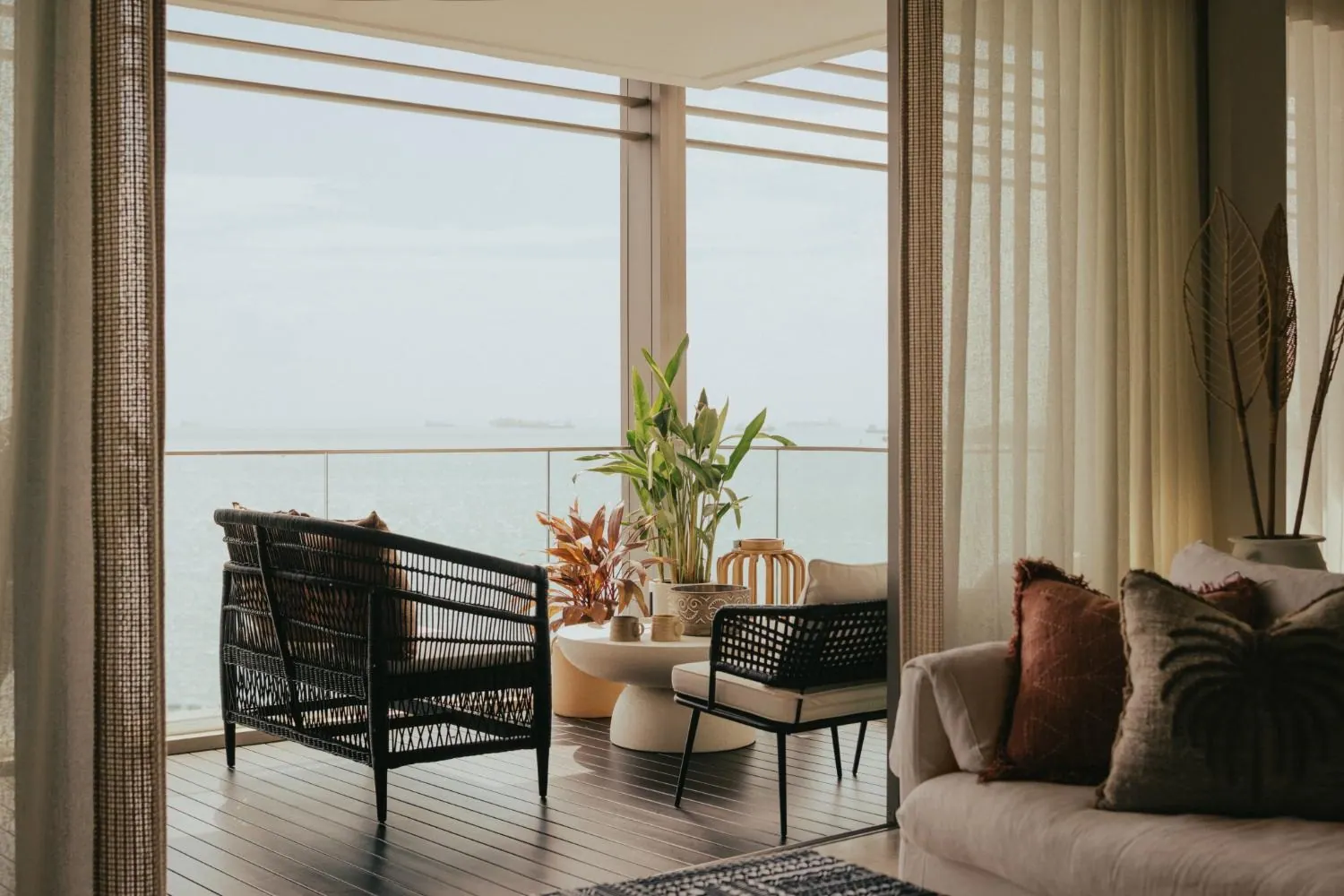
Great design begins with restraint—with listening, with quiet observation of the landscape long before a single line is drawn. At this tranquil seafront condominium in Sentosa, shaped by Aiden T, the design story didn’t begin with trends or ornamentation, but with the horizon. The sea and sky—vast, shifting, and sublime—became the muse. Their presence called not to be outdone, but to be gently framed, honoured in every line, material, and texture that followed.
This sense of reverence set the tone for a transformation grounded in quiet sustainability and timeless aesthetic restraint. A light monochromatic base in warm whites and natural textures subtly amplifies the surrounding landscape. Soft lime plastered walls breathe and regulate moisture while lending a matte, stone-like tactility. The palette, though pared back, is rich in nuance—a conversation of textures rather than colours.
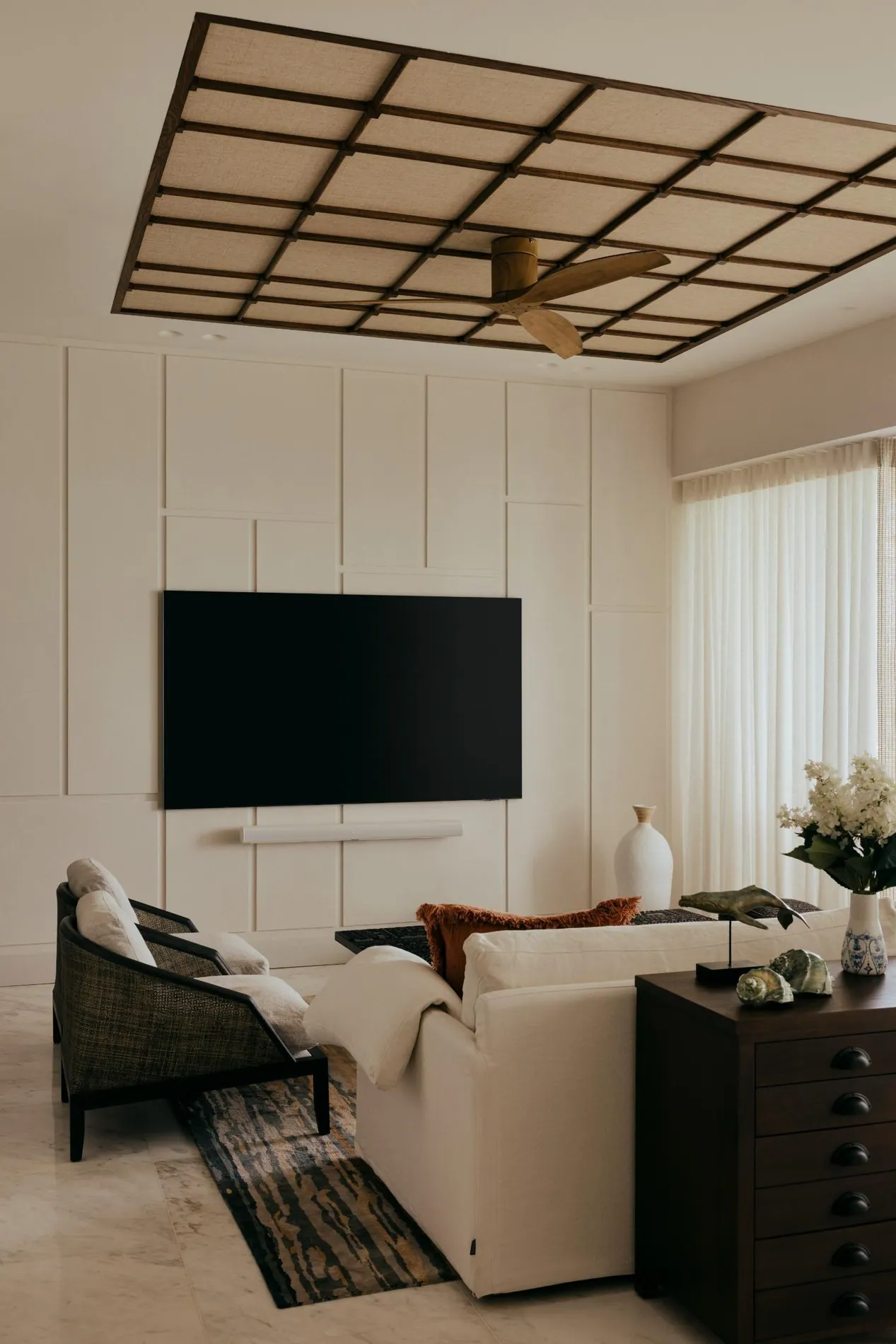
The spatial layout, however, came with challenges. The apartment’s wedge-shaped floor plan naturally disrupted symmetry, a quality both the designer and homeowners deeply appreciated. Instead of forcing architectural alignment, the studio introduced visual balance through thoughtful detailing. A custom ceiling feature—crafted from rattan and wood—anchors the living area, creating an architectural canopy that draws the eye, centring the space without overpowering it. Beneath it, a recycled PET fibre rug echoes the geometry, visually grounding the open-plan layout.
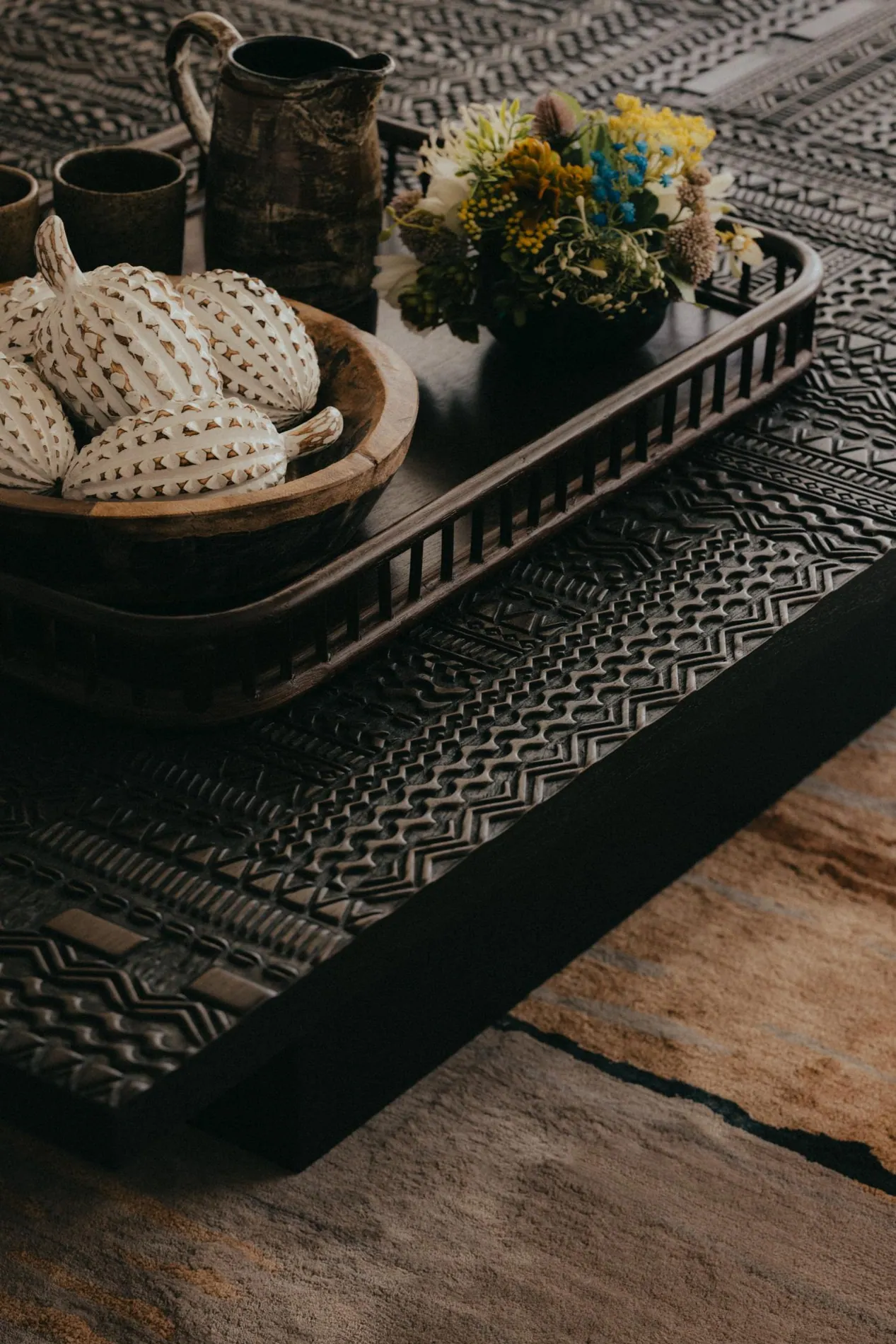
Every design move sought to marry beauty with purpose. The dining area is marked by a bespoke table crafted from reclaimed railway sleepers and topped with pyrite stone—a material chosen not only for its raw, organic beauty but also for its resilience against coastal conditions. Overhead, rope chandeliers nod subtly to the apartment’s seaside setting, bringing a sense of tactile softness and coastal informality.
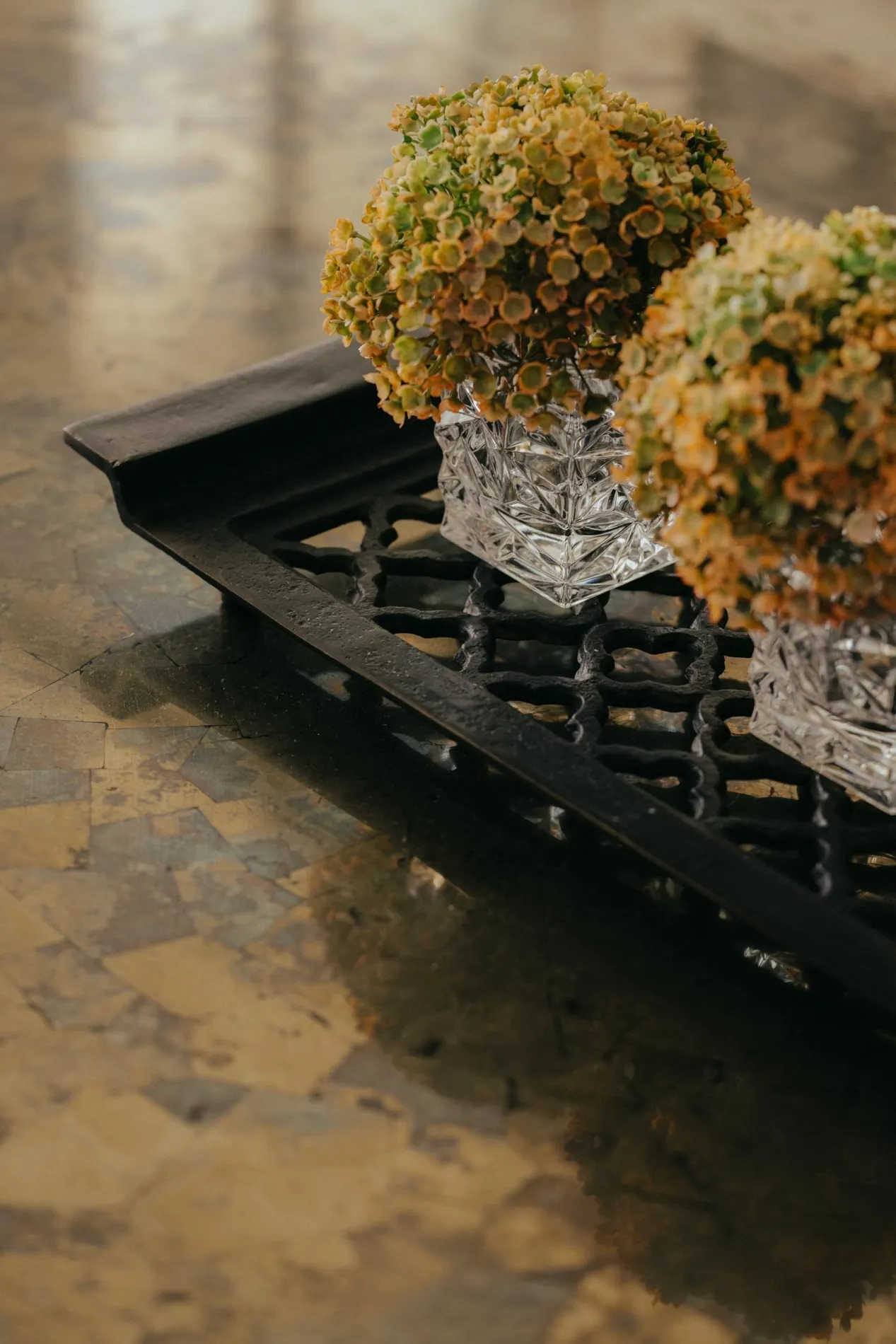
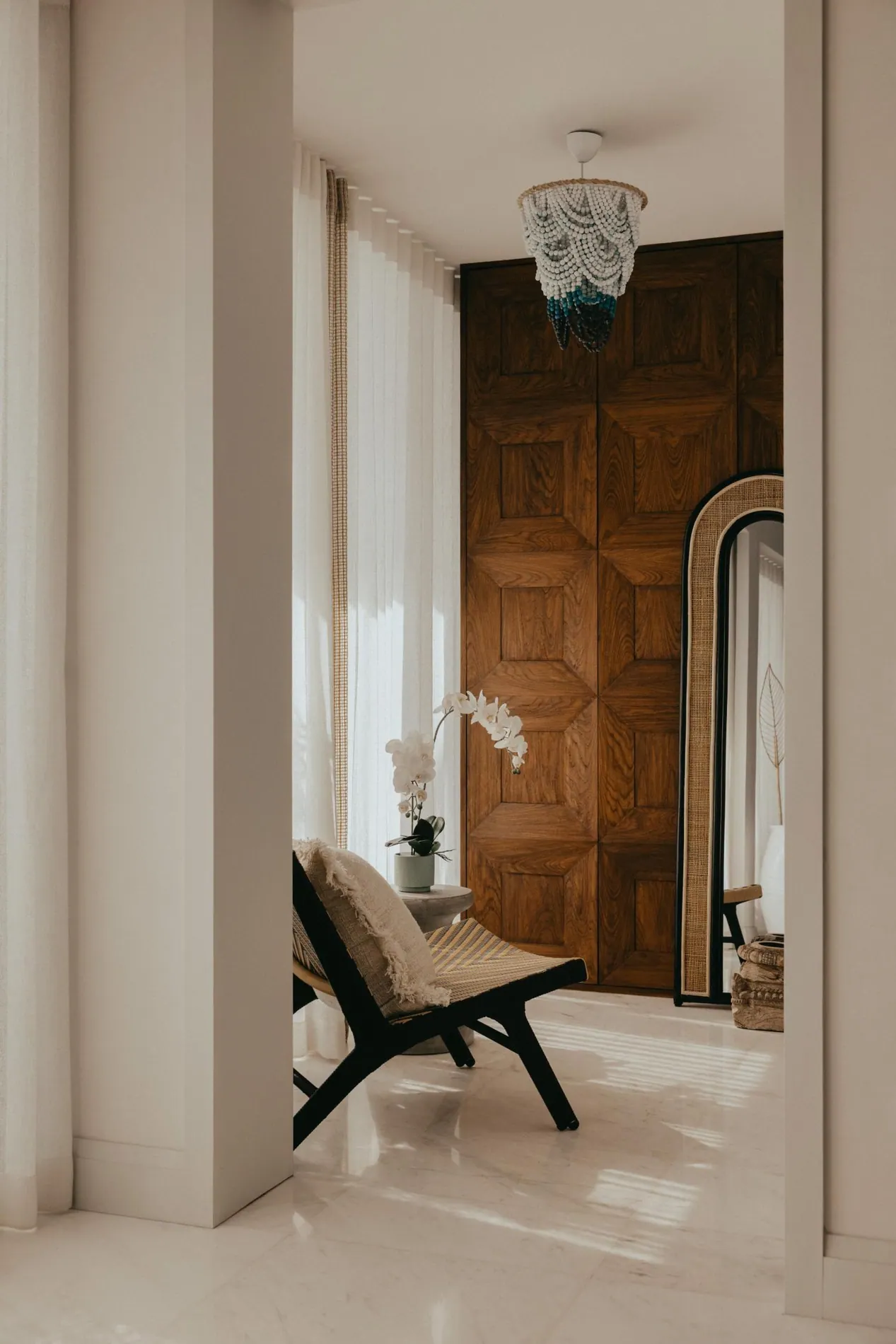
Storage—often the unglamorous backbone of functionality—was approached with intention and finesse. In the private lift lobby, a bespoke wood-panelled cabinet hides shoe storage behind bevelled doors, functioning as both utility and art.
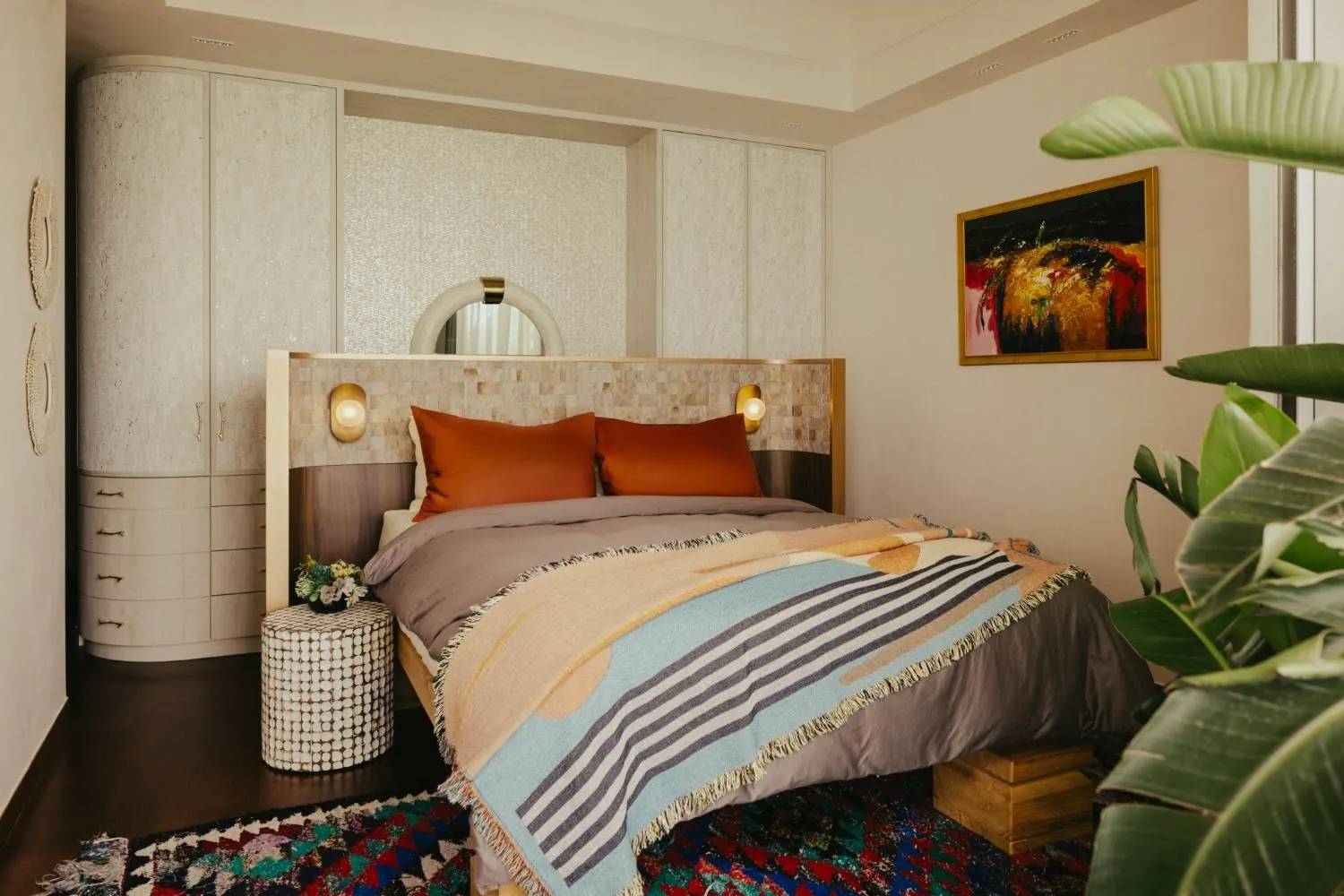
In the primary bedroom, the bed was repositioned to “float” towards the sea, a move that allowed for better circulation, elevated ceiling lines, and additional concealed cabinetry. Wardrobe doors lined with cork and inlaid with delicate gold leaf extend the quiet luxury narrative, adding texture and warmth while maintaining the natural ethos.
In spaces where the view wasn’t as strong, like the bay window in the rear of the apartment, design became an act of transformation. Instead of closing it off, the nook was turned into a cozy coffee corner—welcoming the breeze and framing calmness in an otherwise unremarkable space. Every corner was treated with a philosophy of enhancement, not excess.
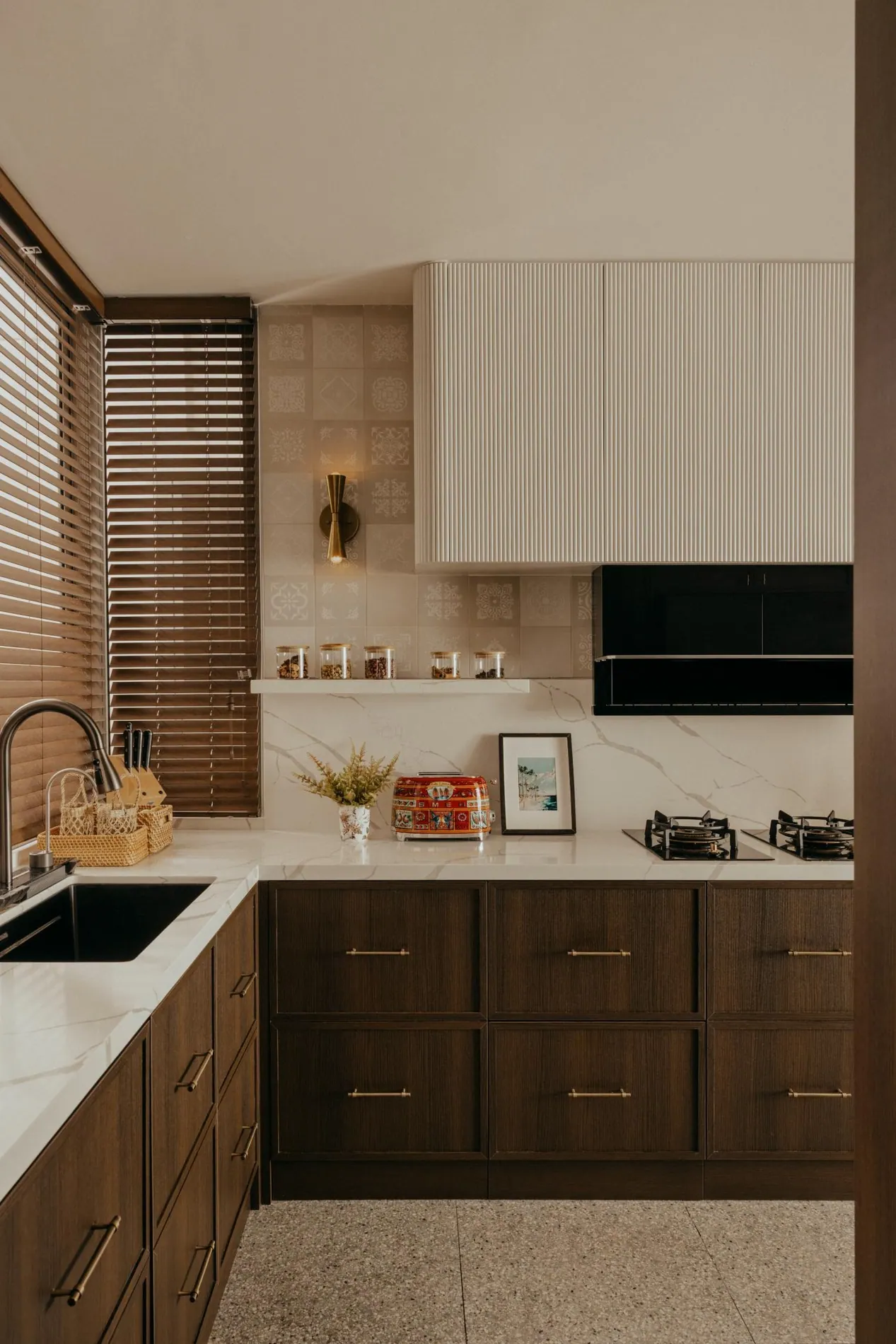
The kitchen, situated in the apartment’s darker zone, embraced its shadowy character with dramatic intent. Deep wood cabinetry in a symmetrical grid conceals a mix of drawers and doors, balancing form and function with sleek simplicity. A fluted range hood in lighter tones introduces a moment of softness, while pale countertops and textured wall tiles lighten the mood without breaking the visual harmony.
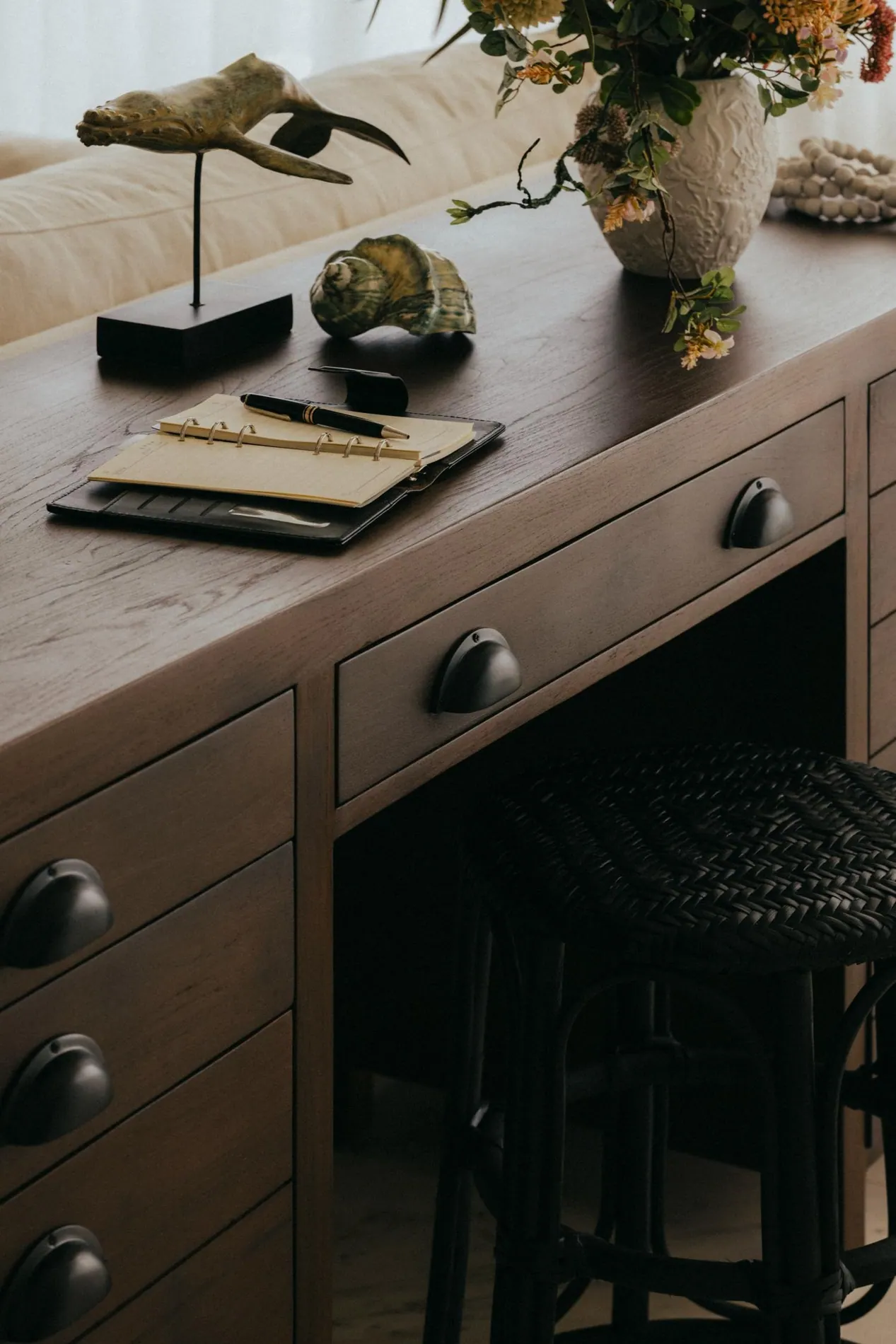
Throughout the home, furniture selections lean heavily into natural, sustainable materials. The credenza behind the sofa, built from recycled teak, cleverly doubles as both a subtle room divider and a casual work station. Loose furnishings dominate over built-ins, creating the flexibility of future use and reducing material waste. Every piece—from outdoor-grade upholstery to artisan-crafted hardware—was chosen not just for beauty, but for resilience and environmental responsibility.
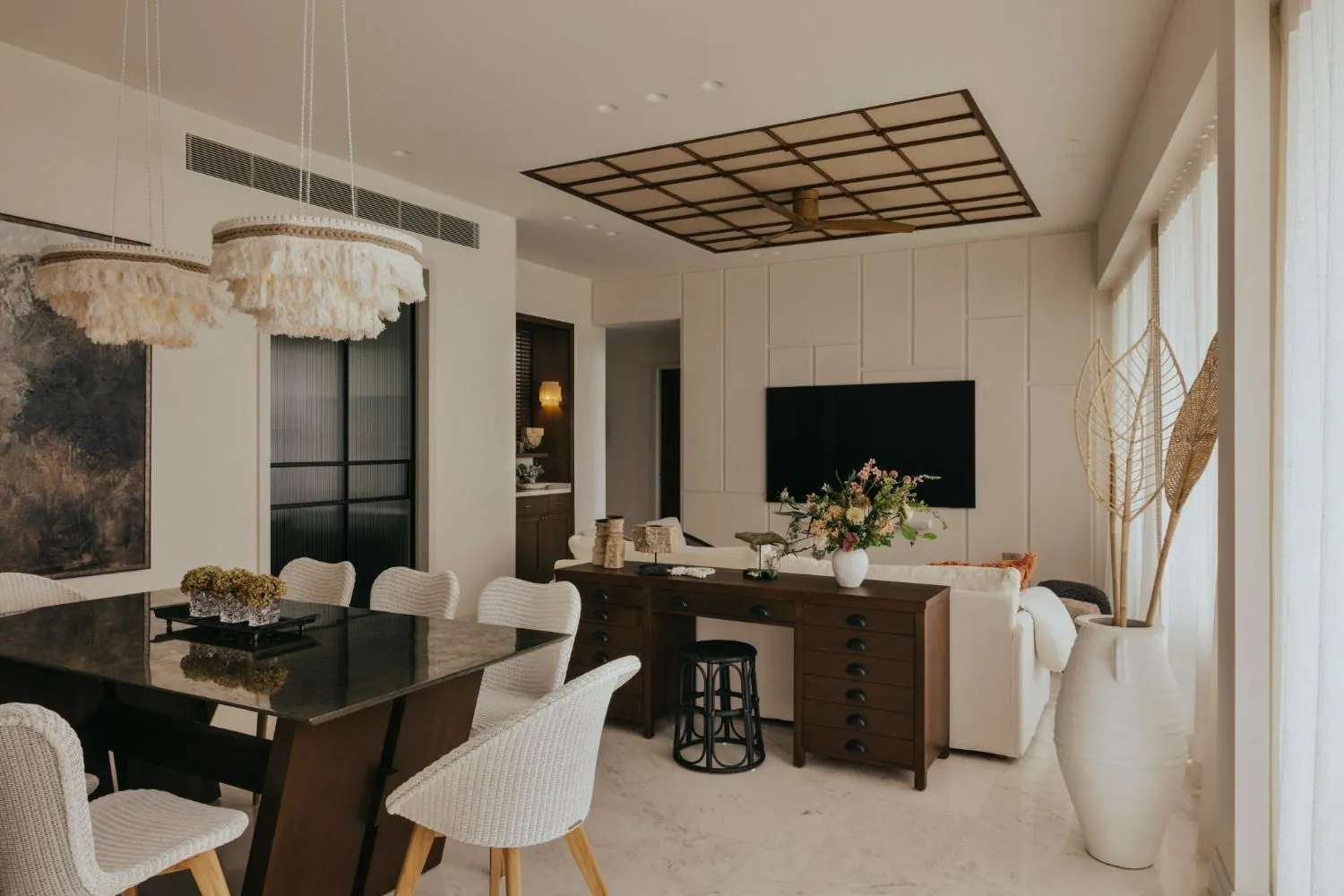
Sustainability was not an afterthought—it was the foundation upon which every design decision was made. Rather than being tacked on as a trend, eco-consciousness was deeply embedded into the creative process from the very beginning. Every material was chosen not just for its aesthetic or durability, but for its environmental integrity and contribution to wellness. From low-toxin paints and formaldehyde-free finishes to natural, breathable lime plaster walls that regulate humidity and enhance indoor air quality, the home was shaped as a living, breathing ecosystem. Rugs crafted from recycled PET bottles soften the space underfoot while quietly extending the lifecycle of everyday waste. FSC-certified woods lend structural warmth with a conscience, and outdoor-grade upholstery ensures longevity in the face of coastal exposure—reducing the need for replacements and minimizing landfill waste. Even the fabrics and furnishings were curated with care, favouring those made with minimal processing and natural fibres. The result is a home that doesn’t just look good—it feels good, functions beautifully, and honours the planet in the most understated, elegant way.
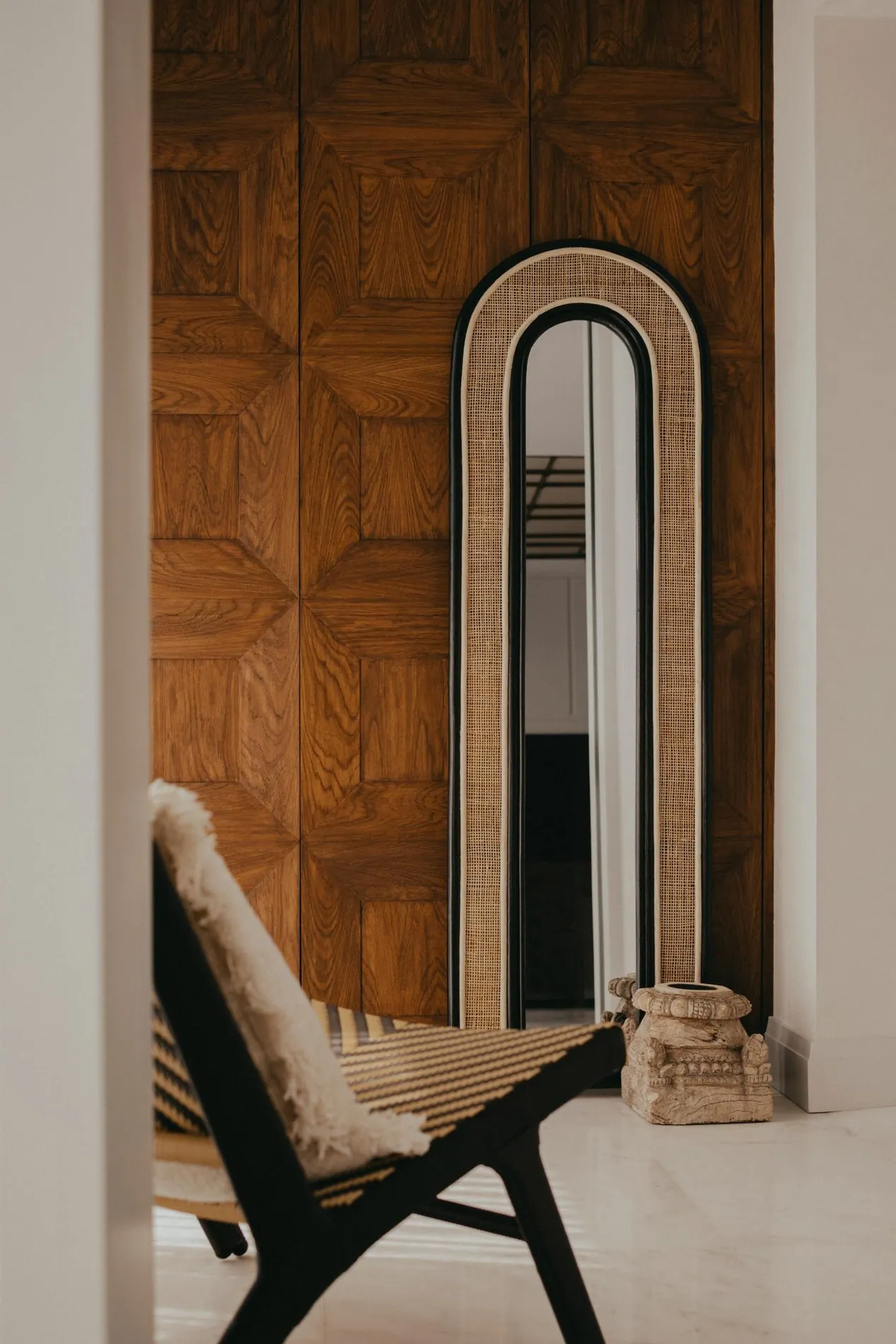
Among these thoughtful touches, one moment in particular stands out for the designer—the private lift lobby. Here, a custom-built shoe cabinet is more than just functional storage; it’s a textural statement, crafted with dynamic detailing and framed by reed glass and mild steel. It offers a glimpse into the heart of the home before one even steps inside. With its soft interplay of light, shadow, and rhythm, the piece embodies the project’s entire ethos: intentional, quiet, and exquisitely refined. It’s a quiet triumph that sets the tone for everything that follows—a prelude to the serenity beyond.
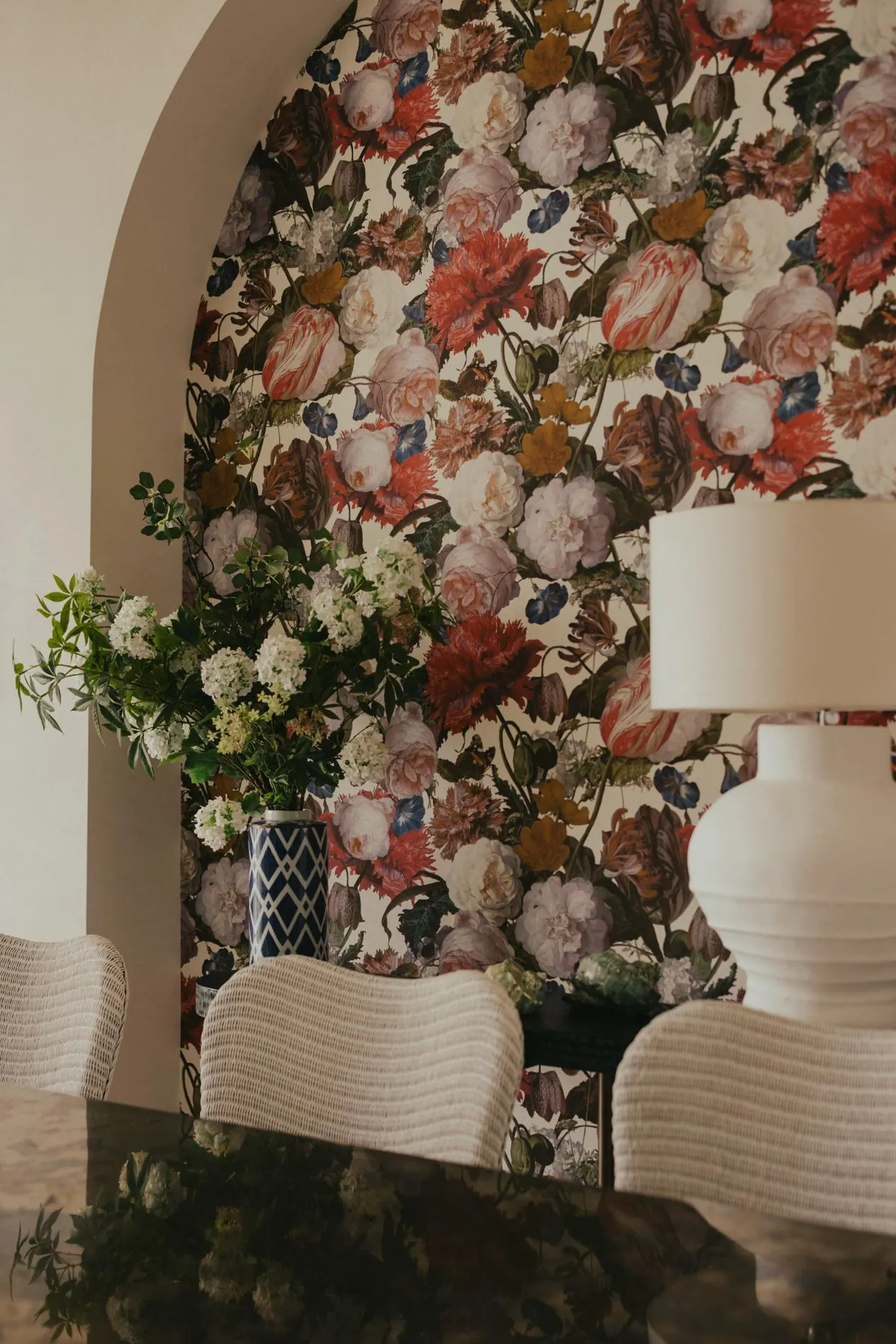
Collaboration with the clients was fluid and trusting. Their vision of a peaceful haven aligned with the studio’s ethos, though some compromises—like a floral wallpaper choice in the dining niche—introduced playful contrast. In a testament to design flexibility, the studio pivoted, integrating the bolder element while keeping the space cohesive.
The emotional resonance of the home is undeniable. For the homeowners—entrepreneurs with fast-paced lives—this space became more than a residence. It became a sanctuary. A place where the pace of life slows, where textures soothe, and where the sea outside continues its gentle dialogue with the interiors.
The result is a residence that doesn’t just look beautiful but feels intentional, meaningful, and deeply alive. It is a study in quiet luxury. A blueprint for wellness. A celebration of restraint. And a reminder that, when designed with thoughtfulness and integrity, a home can transform not just the way we live, but how we feel.
Looking ahead, the designer sees the future of interior design shaped less by fleeting aesthetics and more by values—wellness, sustainability, and intentionality. Quiet luxury, rooted in warmth and subtlety, will remain timeless. But there’s a growing shift toward zero-waste living and conscious material choices that nurture both the environment and the soul. In fast-paced cities like Singapore, it can be challenging to champion these softer, slower philosophies. Yet there’s a rising awareness that the spaces we inhabit deeply influence how we feel, live, and connect. This evolving sensibility embraces not just how a home looks, but how it makes us pause, breathe, and be. The designer hopes to see more of that tactile approach in the future—a design language that invites you to touch, linger, and find joy in the quiet, beautiful details often overlooked in the rush of daily life.